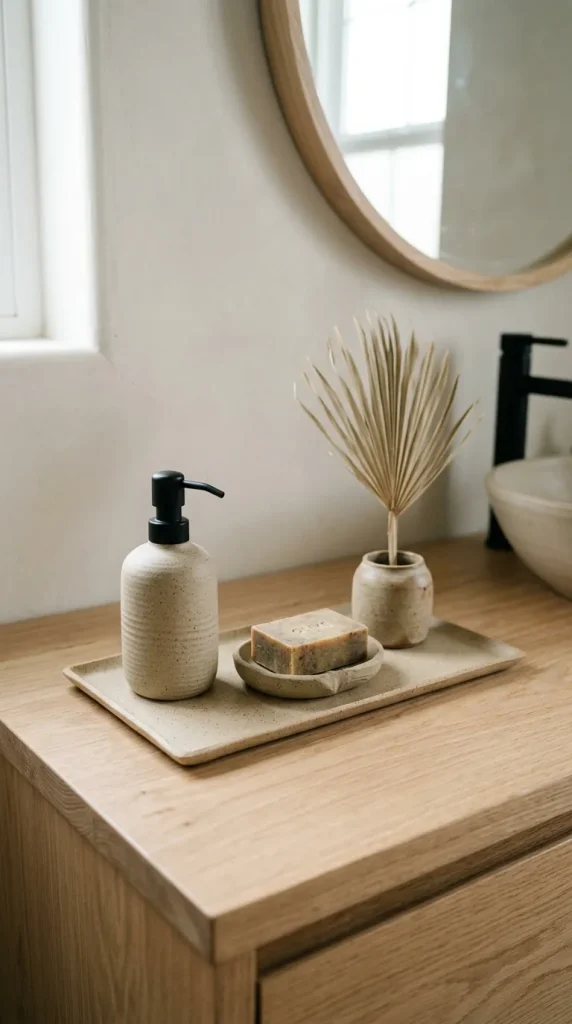
Bathroom trays serve as essential visual anchors for counter organization, converting loose daily essentials into curated decorative vignettes. Placing toiletries, hand soaps, and guest amenities directly onto a countertop can make even a pristine vanity feel chaotic and cluttered. A well-chosen bathroom tray provides a defined boundary that consolidates small items, elevates flat surfaces, and protects underlying stone or wood from moisture staining and water spots. Successfully styling a bathroom tray requires balancing functional utility with aesthetic appeal—combining moisture-resistant tray materials, varied object heights, and contrasting visual textures. This guide details 10 creative bathroom tray decor ideas tailored to diverse interior aesthetics, vanity layouts, and spatial proportions. Readers will gain actionable insights into selecting appropriate tray materials, organizing everyday hygiene items, layering decorative elements, and maintaining pristine hygiene standards across compact powder rooms and master en-suites.
Why This Idea Is Trending or Useful
Styling bathroom trays has become a staple of modern interior organization because it delivers high visual impact and functional efficiency with minimal effort. Using decorative trays offers immediate practical value by streamlining daily grooming routines: when items like liquid hand soap, lotions, jewelry dishes, and cotton jars are grouped onto a single tray, wiping down vanity countertops becomes effortless—the entire tray is simply lifted in one movement. Visual inspiration platforms heavily highlight vanity trays because they offer an affordable way to introduce rich materials—such as Carrara marble, natural teak, brass, or hand-carved stone—without investing in costly structural remodels. Trays are also adaptable: their contents can be refreshed seasonally, adjusted for house guests, or updated to match evolving color schemes. Mastering tray styling equips homeowners with foundational micro-space design skills, including spatial proportion control, tactile layering, and effective clutter containment in high-humidity environments.
Materials and Preparation
Achieving a durable, hygienic, and visually balanced bathroom tray display requires thoughtful material selection and proper surface preparation. Before selecting decor, measure your vanity counter space and check faucet clearances to ensure the tray frame does not obstruct daily sink usage.
Recommended Tray Materials & Supplies
- Moisture-Resistant Trays: Sealed teak, acacia wood, Carrara marble, slate, glazed ceramic, resin, or powder-coated metal.
- Containers & Vessels: Clear glass apothecary jars, amber glass dropper bottles, ceramic pump dispensers, and stoneware canister sets.
- Tactile & Organic Accents: Rolled white Turkish cotton hand towels, sea sponges, dried eucalyptus sprigs, small potted succulents, and natural pillar candles.
- Protective Hardware: Clear self-adhesive silicone rubber bumpers or felt pads for tray bases to prevent counter scratching and water pooling.
Surface Preparation & Safety
- Sanitize Surfaces: Clean the vanity countertop thoroughly with a disinfectant spray and dry completely before placing any tray.
- Attach Silicone Feet: Apply four clear silicone rubber bumpers to the bottom corners of your tray base. Elevating the tray slightly off the counter surface prevents trapped water from causing mildew or staining sensitive marble or granite tops.
- Check Clearances: Ensure items arranged on the tray (especially glass bottles or candles) sit securely within the tray’s rim to prevent accidental tipping into the sink.