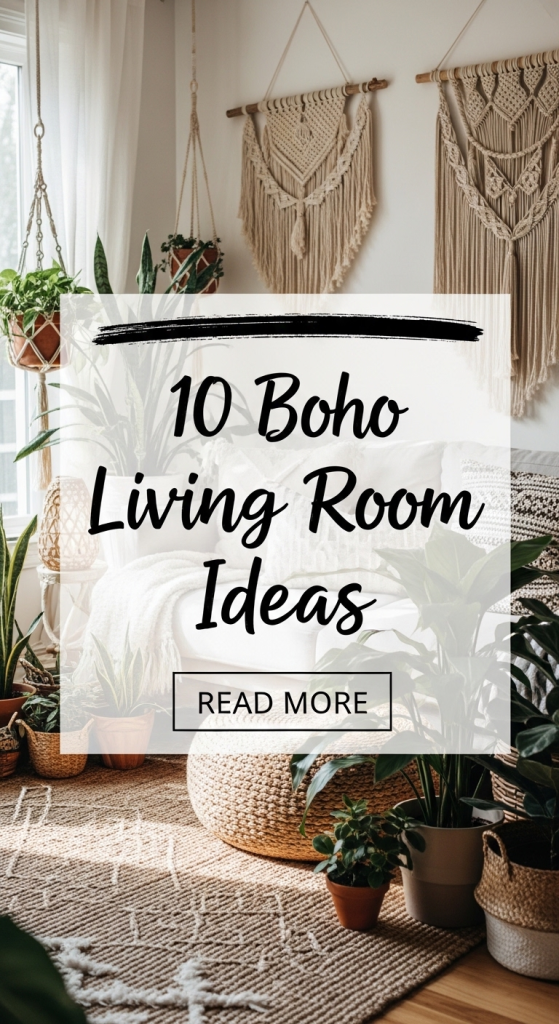
Boho living rooms are all about comfort, creativity, and personal expression. Short for bohemian, this interior style embraces relaxed layers, natural textures, artistic details, and a lived in feel that tells a story. A boho living room does not follow strict rules. Instead, it celebrates individuality, global inspiration, and warmth.

If you love cozy spaces filled with texture, color, and soul, a boho living room may be perfect for you. Whether you prefer a neutral earthy look or a bold colorful vibe, boho design can be adapted to fit your taste and your home.

In this guide, we will explore ten boho living room ideas that will help you create a welcoming and stylish space. Each idea focuses on a different aspect of boho style, from furniture and color palettes to decor and layout. These ideas are perfect for Pinterest inspiration and easy to customize for any home size.


1. Layered Textiles for a Cozy Foundation

One of the most important elements of a boho living room is layered textiles. This style thrives on softness and comfort, and nothing creates that feeling better than layers of fabric.

Start with a large area rug. Persian style rugs, kilim rugs, or vintage inspired patterns work beautifully. Do not worry about matching colors perfectly. Slightly faded or mixed tones add character.

Add throw blankets to your sofa or armchairs. Choose materials like cotton, wool, or woven fabrics. Drape them casually instead of folding them neatly. This relaxed look is key to boho style.

Finish the look with cushions. Mix different sizes, textures, and patterns. Think tassels, embroidery, macrame, or simple linen covers. The goal is to make the seating area feel inviting and lived in.


2. Earthy Color Palettes with Warm Neutrals

Boho living rooms often use earthy and natural colors as a base. Shades like beige, cream, warm white, tan, and soft brown create a calm and grounding atmosphere.

Once you have a neutral base, layer in warmer tones such as terracotta, rust, mustard, olive green, or soft clay colors. These shades add depth without overwhelming the space.

You can introduce color through pillows, rugs, wall art, and small decor pieces. The beauty of boho style is that you can add or change colors easily over time.

Avoid overly bright or harsh colors unless they are balanced with softer tones. A boho living room should feel warm and relaxing, not chaotic.


3. Natural Materials and Organic Textures

Boho interiors are deeply connected to nature. Using natural materials helps create an organic and calming living room.

Look for furniture made from wood, rattan, bamboo, or wicker. A wooden coffee table with visible grain or a rattan accent chair can instantly add boho charm.

Decor elements like jute rugs, woven baskets, clay vases, and stone accessories bring texture and authenticity. These materials add visual interest without needing bold colors.

Even small touches, such as wooden picture frames or ceramic bowls, contribute to the overall boho feel.


4. Low Seating and Relaxed Furniture

Boho living rooms often feature low and relaxed seating arrangements. This creates an informal and cozy environment where people feel comfortable gathering.

Choose sofas with soft cushions and low profiles. Floor cushions or poufs can be added for extra seating and flexibility. These are especially great for small spaces or casual gatherings.

Avoid furniture that looks too structured or formal. Instead, opt for pieces that feel inviting and comfortable. Slight imperfections or vintage finishes add to the charm.

The goal is to create a space that feels welcoming, not stiff or overly styled.


5. Statement Wall Art and Personal Decor

Boho style is personal and expressive. Your living room should reflect your personality and experiences.

Gallery walls work beautifully in boho spaces. Mix framed art, photographs, woven wall hangings, and handmade pieces. Do not worry about perfect alignment. An organic layout feels more authentic.

You can also display items collected from travels or meaningful moments. Think souvenirs, handmade crafts, or vintage finds.

Large statement pieces like a macrame wall hanging or an oversized canvas can anchor the room and draw attention.


6. Indoor Plants for a Fresh and Lively Look

Plants are essential in a boho living room. They bring life, color, and freshness into the space while reinforcing the natural aesthetic.

Choose a mix of plant sizes and types. Large plants like fiddle leaf figs or palms can fill empty corners. Smaller plants work well on shelves, tables, or windowsills.

Use planters made from clay, woven materials, or neutral ceramics. Hanging plants in macrame holders add visual interest and save floor space.

Even if you are not confident with plant care, start with low maintenance options like snake plants or pothos.


7. Vintage and Thrifted Furniture Pieces

Boho style embraces uniqueness, and vintage furniture fits perfectly into this aesthetic.

Look for secondhand pieces with character. A slightly worn coffee table, an old wooden trunk, or a vintage sideboard can become a focal point in your living room.

Do not worry if pieces do not match exactly. Boho living rooms are meant to feel collected over time rather than purchased all at once.

Mixing old and new furniture creates depth and makes the space feel more authentic and layered.


8. Soft Lighting for a Warm Atmosphere

Lighting plays a huge role in creating a cozy boho living room. Avoid harsh overhead lighting whenever possible.

Use floor lamps, table lamps, and string lights to create a soft and inviting glow. Lamps with fabric shades or woven details work especially well.

Candles are another great addition. Place them on coffee tables, shelves, or window ledges to add warmth and ambiance in the evenings.

The key is to use multiple light sources at different heights for a layered lighting effect.


9. Mixing Patterns with Confidence

Pattern mixing is a hallmark of boho style. While it may feel intimidating, it becomes easier when you follow a few simple guidelines.

Stick to a cohesive color palette so patterns feel connected. For example, mix floral, geometric, and tribal patterns in similar tones.

Balance bold patterns with solid colors to avoid visual overload. A patterned rug can be paired with solid cushions, or vice versa.

Remember that boho style is forgiving. If something feels slightly unexpected, it often adds to the charm.


10. A Lived In and Effortless Feel

The most important aspect of a boho living room is the feeling it creates. It should feel relaxed, comfortable, and personal.

Avoid over styling or making everything look perfect. Leave books on the table, drape blankets naturally, and allow your space to evolve over time.

Boho design is not about trends or perfection. It is about creating a home that feels warm and welcoming to you and your guests.

Let your living room reflect your story, your travels, and your creativity.


Final Thoughts

Boho living rooms are timeless, cozy, and endlessly customizable. By focusing on layers, natural materials, warm colors, and personal touches, you can create a space that feels both stylish and deeply comfortable.

Whether you start with one idea or slowly incorporate several, the key is to enjoy the process. Boho style is about freedom and expression, so trust your instincts and have fun designing your space.