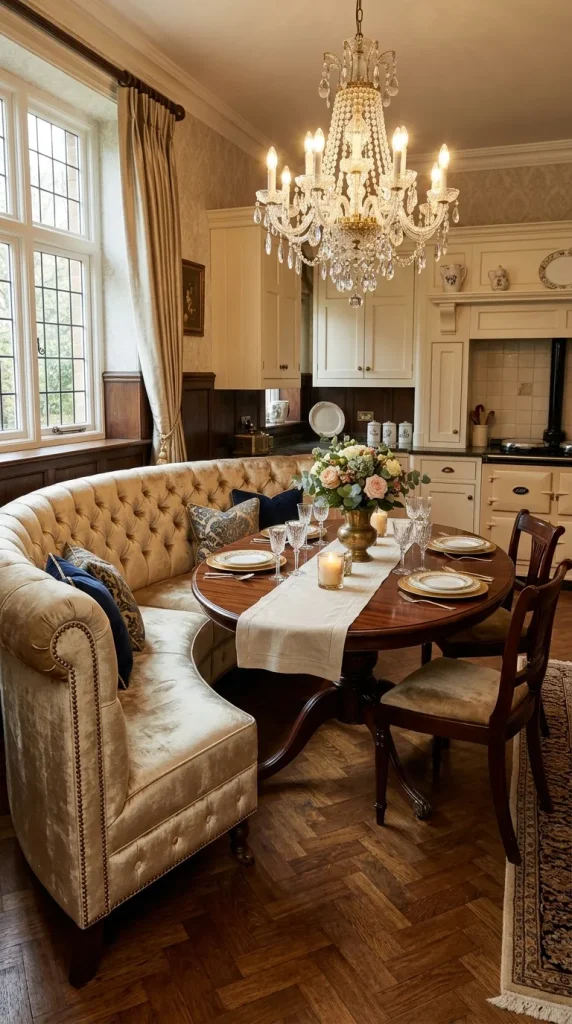
Incorporating tufted velvet banquette seating into a kitchen corner or dining alcove instantly elevates a functional eating area into a luxurious, boutique-hotel-inspired retreat. Deep button-tufting (Capitonné), fluted vertical channel-tufting, and rich velvet textures create a striking contrast against hard kitchen surfaces like quartz countertops, tile backsplashes, and stainless steel appliances.
Beyond high aesthetics, velvet banquettes offer exceptional spatial efficiency—maximizing seating capacity in compact kitchens while providing plush, ergonomic comfort for long breakfasts, remote work, or evening dinner parties. This guide details 10 elegant tufted velvet kitchen nook seating ideas across varied architectural layouts, color palettes, and custom joinery.
Essential Principles for Kitchen Velvet Banquettes

Before choosing your velvet color and tufting style, keep these foundational upholstery and layout guidelines in mind:
- Specify Commercial Performance Velvet: Traditional silk or cotton velvet can stain easily in kitchen environments. Always choose 100% polyester performance velvet, mohair velvet, or Crypton-treated stain-resistant velvet that repels spills, resists water marks, and withstands high rub counts (30,000+ double rubs).
- Balance Tufting Style with Cleaning Maintenance: Deep button-tufting creates timeless diamond shadows, but deep folds can trap breadcrumbs. Vertical channel-tufting offers a modern, streamlined silhouette with fewer crevices for easier daily maintenance.
- Maintain Proper Ergonomic Dimensions: Ensure the bench seat sits 18 to 19 inches high (including compressed cushion height) with a seat depth of 18 to 20 inches. The dining table should overhang the front edge of the banquette seat cushion by 3 to 4 inches for comfortable entry and exit.
- Incorporate Built-In Corner Storage: Utilize the space beneath the velvet seating by integrating lift-top bench seats on hydraulic hinges or smooth-pull oak drawers to store linens, seasonal cookware, or board games.