Selecting the right paint colors for a hallway and staircase transforms a transitional area into an inviting, stylish architectural feature. Hallways and stairwells present unique design challenges, including variable natural lighting, heavy foot traffic, and high-visibility wall angles. In this comprehensive guide, you will explore structured color schemes, practical application methods, and essential surface preparation steps tailored specifically for hallway stairs. Learning how to select and apply paint colors systematically ensures a durable finish, enhances light distribution, and establishes visual harmony with surrounding rooms. Whether you prefer bright minimalist neutrals or rich high-contrast tones, mastering these practical color strategies allows you to update your home’s central interior spaces with complete confidence.
Why This Idea Is Trending or Useful
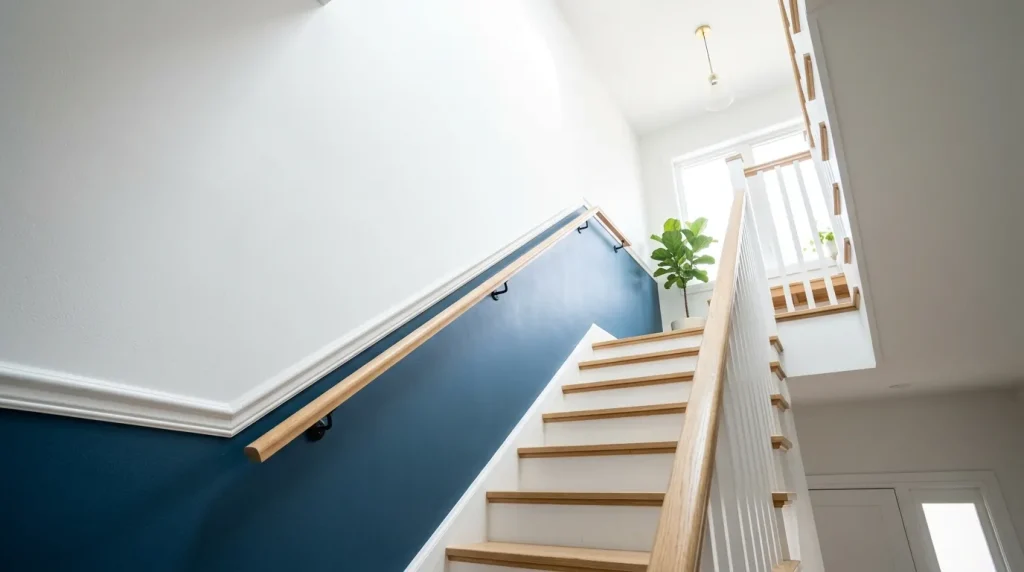
Updating hallway and stair paint colors has become a popular home decor project because it offers exceptional visual impact without requiring structural renovations. Staircases serve as the central nervous system of a home, connecting primary living spaces and establishing an immediate impression upon entering. Using deliberate color placement—such as contrasting risers, accent banisters, or two-tone wall treatments—draws the eye upward and creates an illusion of height and space. Modern paint formulations provide scrubable, durable finishes that withstand everyday scuffs, handprints, and heavy usage. Furthermore, selecting light-reflective or warm color palettes enhances dim stairwells, making windowless hallways feel brighter, larger, and far more welcoming for family members and guests alike.
Materials and Preparation
Proper surface preparation and material selection are essential for achieving a smooth, long-lasting paint finish on hallway stairs. Begin by thoroughly cleaning all wall and woodwork surfaces with a mild detergent solution to remove dust, oils, and handprints. Repair any wall cracks, nail holes, or dented wooden treads using spackling compound or wood filler, sanding surfaces smooth once dry. Essential materials for these painting projects include high-adhesion interior primer, durable washable wall paint (eggshell or satin finish), scuff-resistant enamel paint for stairs and trim (semi-gloss or satin), painter’s tape, drop cloths, and high-density foam rollers. Fundamental tools such as an angled sash brush, sandpaper in varying grits, and a sturdy extension pole are required to reach high stairwell ceilings safely. Proper surface masking and priming prevent bleed-through and guarantee maximum paint adhesion across high-traffic surfaces.
10 Hallway Stairs Ideas Paint Colors
Idea 1: Classic Crisp White and Warm Beige
Step-by-Step Guide