Introduction
Pairing a hanging porch swing with an ivy-covered timber pergola turns standard outdoor seating into an immersive, shaded garden retreat. Lush English or Boston ivy weaves across overhead rafters, creating a living canopy that filters harsh sunlight, drops surrounding ambient temperatures, and adds architectural romance to porches, patios, and verandas. Whether styling a wide twin daybed, a classic slatted wooden bench, or a cozy bohemian egg swing, incorporating living vines, outdoor textiles, and ambient lighting makes the porch an irresistible everyday living space. This guide outlines ten design concepts for climbing ivy pergola swings, covering structural plant training, weatherproof fabric selection, ambient lighting, and timber care.
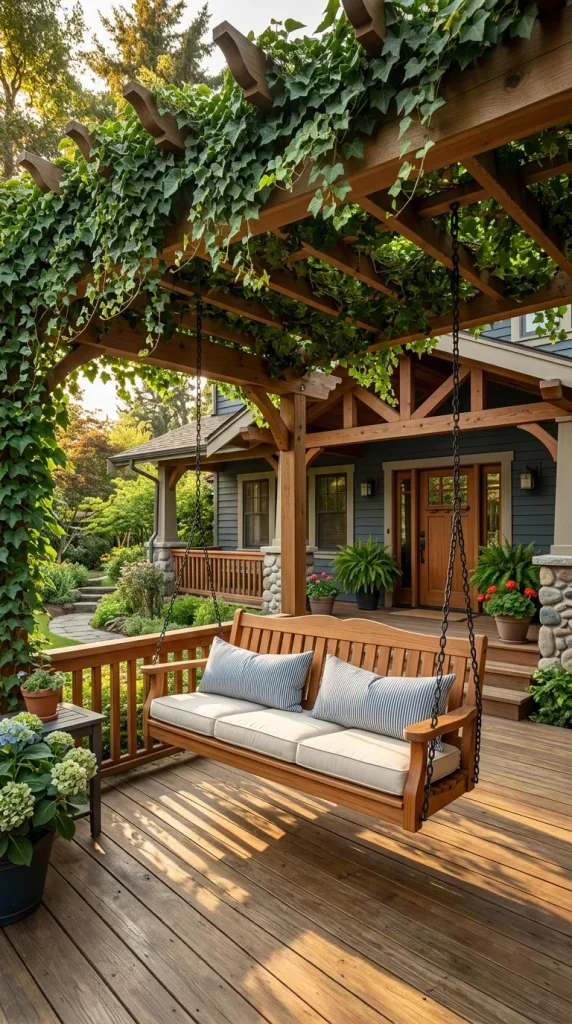
Why Climbing Ivy Pergola Swings Are Trending
- Natural Biophilic Microclimates: Dense ivy foliage provides organic shade and natural evaporative cooling, keeping seating areas noticeably cooler during hot summer afternoons.
- Vertical Visual Depth: Training climbing vines up support posts and across crossbeams turns empty air space into a dynamic vertical garden.
- Multi-Functional Outdoor Living: Blends the gentle, relaxing rhythm of a swing bench with the spatial definition of an enclosed architectural pergola.
- Low-Maintenance Longevity: Hardy evergreen ivy varieties provide year-round greenery, privacy screening, and wind buffering with minimal seasonal replanting.