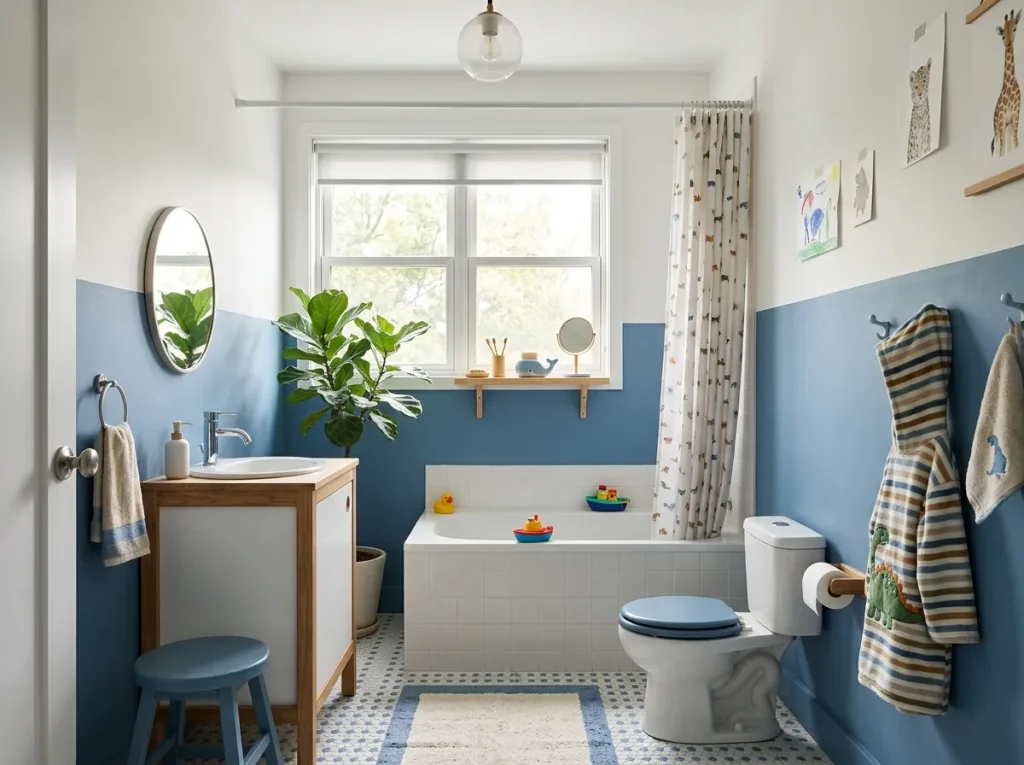
Designing a contemporary, highly functional bathroom for children requires an intentional fusion of playful aesthetics, smart spatial ergonomics, and moisture-resistant material architecture. Far from relying on overwhelming commercial motifs, a modern kids’ bathroom balances youthful energy with a refined, sophisticated envelope that effortlessly grows alongside your family. This comprehensive design guide outlines practical, original methods to help parents transform basic plumbing layouts into stunning architectural spaces. By learning how to balance raw textures like natural wood vanities and texturized ceramics with matte hardware, you will master the exact principles needed to execute a property-wide luxury update. No matter your square footage constraints, these curated ideas offer clear, actionable steps to build a beautifully styled space that bridges safety with ultimate domestic utility.
Why This Idea Is Trending or Useful
The massive wave of interest in sophisticated, longevity-focused children’s bathrooms across modern interior platforms stems from a collective desire to establish spaces that integrate seamlessly into the main home’s design language. Homeowners are actively moving away from short-lived, cartoon-themed decals in favor of a clean, minimalist style base that offers genuine long-term property equity. This creative project holds immense practical value because structured bathroom design directly improves organization efficiency, child independence, and water safety through smart fixtures and accessibility integration. The high versatility of modern tile layouts and modular cabinetry makes these updates exceptionally beginner-friendly, offering impactful ways to personalize a home without sacrificing future resale value.
Materials and Preparation
Before embarking on a comprehensive bathroom renovation, thorough planning and systematic surface preparation are essential to guarantee a waterproof, long-lasting finish. The foundational materials required across these modern schemes include high-density porcelain or ceramic tiles, slip-resistant floor treatments, low-VOC moisture-resistant wall paints, solid quartz countertops, and lead-free solid brass plumbing hardware. Essential tools for the measurement and setup method involve a self-leveling laser line generator, an electronic stud finder, a metal measuring tape, a heavy-duty grout float, and safety glasses. Begin your preparation steps by executing a rigorous water-testing and priming phase, ensuring all drywall surfaces behind wet zones are fully sealed with a waterproof membrane.