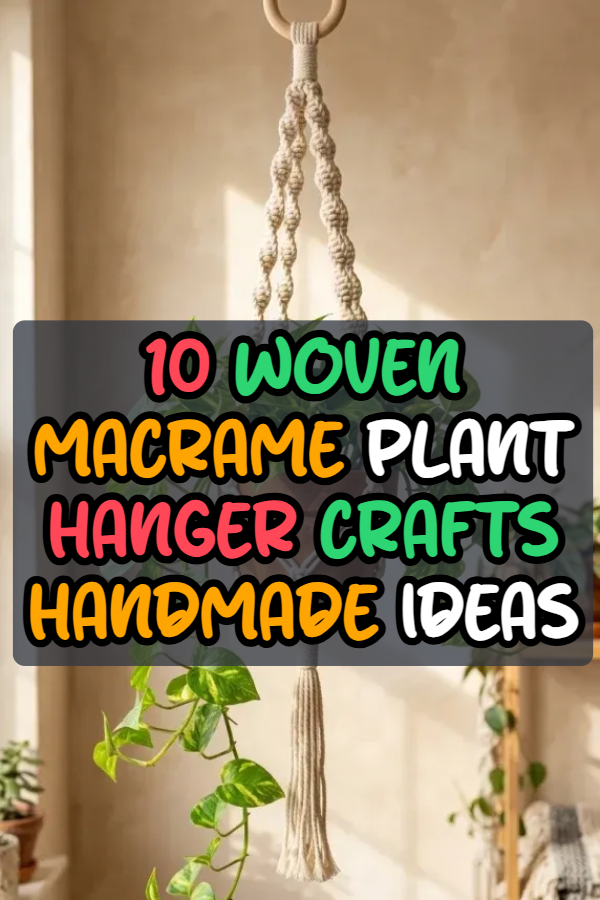
10 Woven Macrame Plant Hanger Crafts Handmade Ideas

Transforming spools of natural cotton rope and jute twine into structural, knotted plant hangers merges the ancient textile art of macramé with modern botanical styling. Using basic knotting configurations—such as square knots, half-knot spirals, clove hitches, and wrapped gathering knots—crafters can construct durable, flexible plant cradles tailored to any pot diameter or weight. Suspending houseplants off tables and window sills maximizes natural light exposure for trailing foliage while creating vertical layers of greenery throughout living spaces. This comprehensive guide details ten distinct macramé plant hanger designs, ranging from clean Scandinavian bead slings to tiered multi-pot towers and vibrant dip-dyed boho cradles. You will explore cord diameter calculations, tension consistency, pot basket mechanics, weight-bearing load distribution, and wall-mounting hardware to ensure your handmade plant hangers remain safe, balanced, and visually stunning.
Why This Idea Is Trending or Useful
Macramé plant hangers continue to dominate interior design, urban jungle styling, and DIY textile crafting because they offer an accessible, zero-power creative practice with immediate functional utility. In compact urban apartments, vertical gardening is essential for keeping surfaces clear and preventing pets from reaching curious trailing vines like pothos, string of pearls, and philodendrons. Handcrafted macramé provides an organic, tactile aesthetic that softens sharp architectural lines, pairing raw cotton fibers with unglazed terracotta, glazed ceramic, or polished brass planters. Furthermore, macramé requires minimal specialized equipment—only cotton cord, a wooden or metal ring, and sharp fabric shears. Crafters can complete projects in a single afternoon while customizing every dimension, tassel length, and knot sequence to fit specific vessel shapes. The balance of low material costs, therapeutic knotting repetition, high durability, and timeless bohemian charm makes woven macramé plant hangers an essential textile craft.
Materials and Preparation
Building safe, long-lasting macramé plant hangers requires selecting high-tensile cords, sturdy suspension rings, and appropriate measuring tools before starting your knots. Essential crafting materials include three-ply twisted or single-strand combed cotton macramé cord (typically three-millimeter to five-millimeter diameter for standard six-to-eight-inch pots), natural hardwood or welded brass suspension rings (two to three inches in diameter), raw unvarnished wooden beads with large interior holes, natural jute twine, and S-hooks for hanging while working. Required tools include heavy-duty fabric shears, a metal measuring tape, a garment steamer or fine comb for fringe brushing, and an adjustable clothing rack or door-mounted hook to hold the piece at eye level while knotting. Begin preparation by measuring cord lengths: a standard rule of thumb is cutting working cords four to six times the intended finished hanger length to account for cord take-up inside bulky knots. Measure your planter pot’s base and rim circumference to accurately space your basket cross-knots, ensuring the finished woven cradle cups the container securely without tilting.
Idea 1: Classic Spiral Half-Knot Bohemian Plant Hanger
Setup Method

The classic spiral half-knot bohemian plant hanger uses continuous vertical columns of half square knots that naturally twist into an organic helical spiral down four suspension arms. This design delivers a rhythmic, dynamic visual flow that catches ambient light along the twists, framing trailing vines like English ivy and pothos with classic 1970s retro charm. Below the twisting spiral columns, open structural square knots transition into a secure diamond basket that holds six-to-eight-inch terracotta pots, terminating in a long, fluffy cotton tassel.
To set up this spiral hanger, cut eight cords measuring fifteen feet each of four-millimeter natural cotton cord. Thread all eight cords through a two-inch wooden ring until centered, yielding sixteen working strands measuring seven and a half feet. Secure the cords directly below the ring using a tight two-inch wrapped gathering knot. Divide the sixteen strands into four equal groups of four cords. For each group of four, identify the two outer working cords and two center filler cords; tie continuous half square knots (always looping the left working cord over the front), allowing the knot column to twist naturally into an eight-inch spiral. Leave a four-inch open gap, tie three standard flat square knots, and create the lower basket by cross-connecting adjacent cord pairs with square knots three inches down. Gather all sixteen cords beneath the pot base with a final wrapped gathering knot, trimming the remaining tail fringe to an even ten inches.
Idea 2: Geometric Diamond Square-Knot Hanging Basket
How to Create

A geometric diamond square-knot hanging basket replaces long rope arms with wide, flat structural bands featuring intricate diamond lattice patterns. This design weaves alternating square knots into wide panels along the upper hanger, creating an architectural, modern silhouette that looks structured and clean against minimalist walls. The wide straps provide stable weight distribution, preventing heavy ceramic planters from tilting or swinging in drafty windows.
To create this geometric basket, mount eight sixteen-foot lengths of five-millimeter braided cotton cord onto a three-inch welded brass ring, creating sixteen working strands. Group the cords into four sections of four strands. Build a solid diamond lattice on each arm: start with one centered square knot, expand to two alternating square knots on row two, three on row three, and then taper back down to one knot, forming a crisp hollow diamond silhouette. Repeat this diamond motif twice down each arm. To construct the pot cradle, join adjacent arms together by tying alternating square knots two inches below the last diamond, continuing the mesh pattern around the circumference of your planter. Seal the base of the pot cradle with a two-inch gathering knot wrapped tightly with contrasting natural jute twine, leaving an eight-inch straight-cut tail tassel below.
Idea 3: Tiered Double-Decker Dual Pot Macrame Hanger
Step-by-Step Guide

A tiered double-decker dual pot macramé hanger stacks two separate plant cradles vertically on a single suspension line, doubling indoor vertical growing capacity without requiring extra ceiling hooks. This design features a small upper cradle designed for a four-inch succulent pot, followed by extended spacer cords that drop down into a larger, reinforced lower cradle built for an eight-inch trailing philodendron. The vertical alignment creates a cascading living column of green foliage that commands attention in tall window corners, high-ceiling entryways, and patio nooks.
Begin construction by cutting eight twenty-four-foot strands of four-millimeter three-ply cotton cord. Fold the cords in half through a heavy-duty three-inch steel or hardwood ring, securing them with a three-inch wrapped gathering knot. Divide into four groups of four cords and tie eight inches of alternating square knots on each arm. Connect the four arms into the first pot basket by tying cross-over square knots two inches below the straps, sized to cradle a four-inch ceramic pot, and secure the base of this upper tier with a wrapped gathering knot. Extend the sixteen cords downward twelve to fifteen inches in smooth, unknotted straight lines. Form the second, larger basket by tying wider alternating square knots spaced three inches apart to accommodate an eight-inch planter. Close the bottom tier with a heavy-duty three-inch wrapped gathering knot, trimming the lower fringe to twelve inches and brushing out the tail strands with a wire pet slicker comb.
Idea 4: Raw Natural Wooden Bead & Brass Ring Plant Cradle
Execution Process

A raw natural wooden bead and brass ring plant cradle incorporates unvarnished blonde hardwood beads and polished brass accents between minimalist square knots to produce a sleek Scandinavian botanical sling. This design emphasizes negative space and organic timber textures, using smooth wooden spheres to break up long cord lines. The light, airy construction lets the beauty of the planter bowl and plant foliage take center stage, making it an exceptional fit for Japandi, modern Scandinavian, and minimalist interior themes.
Execute this design by cutting eight twelve-foot lengths of three-millimeter single-strand natural cotton cord, looping them through a solid two-inch raw maple ring and securing with a gathering knot. On each of the four arms, tie three flat square knots, thread a twenty-millimeter natural wooden bead onto the two center filler cords, and tie three more square knots directly underneath to lock the bead firmly in place. Repeat this sequence twice on each arm, spacing the bead clusters four inches apart. Form the lower pot cradle by inserting sixteen-millimeter wooden beads onto the crossover junctions between arms, securing each joint with a single flat square knot beneath the bead. Gather all cords three inches below the pot base with a neat gathering knot wrapped in metallic brass embroidery floss, trimming the bottom cord ends flush to eliminate the tassel for a clean, contemporary finish.
Idea 5: Flat-Wall Semi-Circular Half-Mandala Wall Planter
How to Create

A flat-wall semi-circular half-mandala wall planter suspends a single potted plant flush against a flat wall rather than hanging freely from a ceiling hook. This design mounts onto a straight horizontal driftwood branch or wooden dowel, featuring an intricate half-mandala tapestry woven with diagonal double half hitches and berry knots across the upper backdrop. Two forward-projecting woven loops extend outward from the bottom edge of the wall hanging to cup a flat-backed ceramic wall planter or half-round terracotta pot securely against the wall surface.
To build this wall planter, mount twelve eight-foot cords of four-millimeter single-twist cotton cord onto a twelve-inch horizontal wooden dowel using lark’s head knots, creating twenty-four working strands. Weave an arched half-mandala pattern across the upper six inches using concentric rows of diagonal double half hitch knots, incorporating decorative three-dimensional berry knots into the center wedges. From the outer and center cords below the mandala, braid four reinforced four-strand flat bands forward at ninety-degree angles to form a horizontal pot cradle basket. Join the bands beneath the pot with a tight square knot matrix flush against the lower hanging cords. Allow the remaining background cords to fall straight down into an asymmetrical fringe, combing and trimming the lower edge into a crisp chevron point using fabric shears.
Idea 6: Minimalist Single-Cord Berry-Knot Micro Air Plant Sling
Step-by-Step Guide

A minimalist single-cord berry-knot micro air plant sling utilizes fine two-millimeter cord and three-dimensional berry knots to create delicate hanging cradles for tillandsia air plants, small glass propagation tubes, or miniature succulent cups. This lightweight design avoids heavy, bulky cord clusters, using slender braided lines punctuated by spherical raised berry knots that grip small containers without overwhelming their delicate scale. Hung in clusters of three or five along curtain rods, these micro-slings create an enchanting floating botanical installation.
Begin fabrication by cutting four six-foot lengths of two-millimeter cotton macramé twine. Fold the cords through a one-inch brass metal ring, securing them with a tiny half-inch wrapped knot. Divide the eight working strands into two sets of four. On each side, tie two inches of spiral half knots, followed by a decorative berry knot (constructed by tying three consecutive square knots, threading the two center filler cords up and through the gap above the first knot, and pulling down to roll the knots into a raised 3D sphere). Tie two square knots beneath the berry knot to lock its shape. Connect the two arms two inches down with alternating square knots to form a tiny two-inch basket. Close the base with a small wrapped gathering knot, trimming the tail fringe to three inches and untwisting the ends for a soft, wispy tassel.
Idea 7: Dip-Dyed Ombre Indigo & Terracotta Macrame Hanger
Setup Method

A dip-dyed ombre indigo and terracotta macramé hanger introduces bold, gradient textile coloring to traditional undyed fiber art. This design completes a standard structural square-knot plant hanger using natural unbleached cotton cord, which is then submerged into fiber-reactive dye baths—such as deep indigo blue, botanical eucalyptus green, or warm terracotta rust. Submerging the lower fringe and bottom basket in graduating time intervals creates a rich watercolor ombre effect that transitions smoothly from rich saturated color at the tassel up to natural creamy white at the suspension ring.
To set up this dip-dyed hanger, weave a complete classic four-arm square knot plant hanger using four-millimeter unbleached, raw natural cotton cord, leaving a generous twelve-inch bottom tassel fringe. Prepare a liquid dye bath in a stainless steel bucket using warm water, fiber-reactive liquid fabric dye, and two tablespoons of non-iodized salt. Wet the lower half of the macramé hanger with clean tap water to facilitate smooth capillary wicking. Lower the bottom six inches of the hanger (including the tassel) into the dye bath for ten minutes. Submerge the next four inches (the lower pot basket) for two minutes, and quickly dip the upper two inches for thirty seconds before lifting the piece completely. Rinse the hanger thoroughly under cold running water until the water runs clear, wring gently in a clean towel, and hang outdoors in the shade to dry completely before inserting a clean white ceramic pot.
Idea 8: Chunky Jute & Twisted Sisal Rope Rustic Plant Hanger
Execution Process

A chunky jute and twisted sisal rope rustic plant hanger utilizes coarse, heavy-duty natural plant fibers to create a rugged, weather-resistant plant cradle suitable for covered porches, pergolas, and rustic farmhouse interiors. The rough, earthy texture and rich golden-brown color of six-millimeter three-ply natural jute rope hold firm, substantial knot shapes that resist stretching under the weight of heavy, wet garden soil. The thick rope lines provide strong visual presence, pairing naturally with unglazed clay pots, concrete planters, and galvanized metal containers.
Execute this design by cutting eight eighteen-foot strands of heavy six-millimeter three-ply natural jute rope. Pass the ropes through a heavy-duty three-inch galvanized steel ring, binding the cords together with a three-inch gathering knot wrapped with tarred marline twine or thin jute string. Divide the cords into four pairs of two. Because thick jute rope is stiff, utilize simple, bold knotting: tie a sequence of large overhand knots spaced four inches apart down each arm, allowing the natural twists of the thick sisal to provide textural interest. To construct the pot base, join adjacent rope pairs four inches below the last overhand knots using heavy flat square knots. Secure the bottom base beneath the planter with a heavy-duty fisherman’s eye knot or tightly wrapped gathering knot, trimming the thick jute tail to eight inches and unraveling the three-ply rope strands to create a thick, rustic fringe.
Idea 9: Wide-Rimmed Glass Bowl Lotus Knot Terrarium Hanger
How to Create

A wide-rimmed glass bowl lotus knot terrarium hanger features an open, web-like cradle designed specifically to support round glass orb terrariums, fishbowl planters, and shallow succulent dishes. Glass vessels require flat, non-abrasive knotting that distributes pressure evenly across curved glass surfaces without scratching or obstructing panoramic views of internal moss and soil layers. This design uses flat square-knot mesh webbing arranged in a radiating eight-point lotus blossom pattern beneath the glass base, creating a secure, transparent suspension net.
To create this terrarium hanger, cut twelve twelve-foot lengths of three-millimeter braided cotton cord, mounting them onto a two-inch brass ring to produce twenty-four working strands. Tie two inches of flat square sinnets along six structural arms. At the shoulder level of your glass terrarium bowl, begin an open, interlocking net: connect adjacent cords using alternating flat half-hitches and square knots spaced two inches apart, forming a flexible diamond net that conforms smoothly around the glass curves. As the net reaches the underside of the bowl, join all twenty-four strands into an eight-petal radiating lotus flower pattern using flat square knots positioned flush against the bottom center of the glass. Finish the base with an ultra-short gathering knot, trimming the tail fringe flush against the base so the glass bowl can rest flat on a tabletop when taken down from its hook.
Idea 10: Intricate Fringe Tassel & Feather Leaf Macrame Hanger
Step-by-Step Guide

An intricate fringe tassel and feather leaf macramé hanger incorporates hand-brushed macramé leaves (feathers) and multi-layered fringe tassels along the suspension arms and tail base. This design adds soft, decorative bohemian elements to a functional plant hanger, featuring stiffened cotton cord feathers adorned with wooden accent beads flanking the upper straps. The bottom tail is detailed with an extra-long, densely combed fringe brushed out into a soft fiber cloud that cascades beneath the hanging planter.
Begin construction by cutting eight sixteen-foot lengths of four-millimeter single-twist combed cotton cord. Fold cords through a wooden suspension ring, securing with a wrapped gathering knot. On two opposing arms, weave six inches of square knots, leaving four inches of open cord to attach decorative macramé feathers. To build a feather: cut ten six-inch cord scraps, tying them in alternating horizontal square knots around the two center filler cords; trim the outer ends into a pointed leaf shape with sharp scissors, brush thoroughly with a fine-tooth comb, and mist with fabric stiffener spray to hold shape. Form the lower pot cradle using standard alternating diamond square knots. Close the base beneath the pot with a two-inch gathering knot wrapped in gold metallic thread. Leave a dramatic sixteen-inch tail tassel, combing all lower cords out completely into a plush, silky fiber cloud using a wire pet slicker brush.
Common Beginner Mistakes and How to Avoid Them
The most critical mistake beginners make when crafting macramé plant hangers is calculating cord lengths incorrectly. Macramé knots—especially dense square knot sinnets and spiral half-knots—consume significant cord length; cutting cords too short results in running out of working strands halfway down the hanger arms, forcing you to unravel hours of work. Always follow the golden ratio of macramé: cut working cords four to six times the desired finished hanger length, and add an extra two feet if you plan to incorporate long brushable fringe tails or dense knot patterns. Another frequent error is maintaining uneven knotting tension across the four suspension arms. If one arm is knotted tighter than the others, it will be noticeably shorter, causing the pot cradle to hang at an angle and spilling potted soil or water onto floors. Always suspend your hanger from a secure hook while working, stepping back frequently to align knot rows horizontally across all four arms with a measuring tape. Additionally, many crafters make the basket crossover knots too far apart, creating oversized diamond openings that allow pots to slip through when bumped. Keep basket node spacing between two and three inches for standard pots to ensure a snug, slip-free cradle.
Practical Tips for Better Results
Achieving professional, boutique-quality results with DIY macramé plant hangers relies on smart material selection, proper suspension mechanics, and crisp fringe grooming. When choosing cords, use high-quality three-ply twisted cotton for structural plant hangers holding heavy ceramic pots; three-ply rope possesses superior tensile strength and minimal stretch under load compared to soft single-strand cords. When creating bottom wrapped gathering knots, use a separate three-foot working cord and wrap at least seven to ten tight, contiguous coils, pulling the locking loop firmly into the center of the wraps before trimming to ensure the knot cannot unravel under heavy weight. To create perfectly shaped macramé feathers and neat tassel fringes, place your combed cord flat on a cutting mat, lay a stiff cardboard template over the fibers, and trim along the template edge with a fresh rotary cutter or razor-sharp tailor shears. Finally, always install heavy-duty, screw-in ceiling hooks anchored directly into solid wood ceiling joists or use weighted hollow-wall toggle anchors rated for at least thirty to fifty pounds to support the combined weight of wet soil, ceramic pots, and mature plants safely.
Styling, Presentation, or Organization Ideas
Styling handmade macramé plant hangers involves balancing heights, pot finishes, and plant foliage textures to create an intentional indoor jungle. Group hangers in odd-numbered clusters of three at staggered ceiling heights in front of large south-facing or east-facing windows, pairing deep green trailing pothos with silvery satin scindapsus and sculptural trailing succulents for rich botanical contrast. Choose planter vessels that complement your rope fiber tones: pair raw creamy cotton hangers with warm terracotta pots and sage green ceramics, or match dark charcoal and jute hangers with matte black and white geometric pots. For outdoor covered patios, hang rustic jute planters from natural cedar pergolas or wrought-iron wall brackets, surrounding seating areas with fragrant hanging herbs like trailing rosemary and mint. If presenting a handmade macramé plant hanger as a gift, package the folded hanger inside a kraft paper gift box alongside a matching unglazed terracotta pot, a care instruction card, and a packet of indoor houseplant seeds tied with natural cotton twine.
Budget or Time Planning
Crafting custom macramé plant hangers is an exceptionally economical, high-reward DIY textile project that delivers luxury home decor on an accessible budget. A single one-hundred-meter (three-hundred-and-twenty-eight-foot) spool of four-millimeter natural cotton macramé cord costs between twelve and eighteen dollars and yields enough rope to build two to three full-sized hanging plant cradles. Adding a multi-pack of solid hardwood rings and natural wooden beads brings the total starter investment to roughly twenty to twenty-five dollars, reducing the cost per handmade hanger to less than eight dollars. In terms of time management, measuring, cutting, and securing the suspension cords onto a ring takes approximately fifteen minutes. Knotting the four structural arms and weaving the lower pot basket requires forty-five to seventy-five minutes of relaxing, focused crafting time. Trimming, brushing, and steaming the fringe tail takes an additional fifteen minutes. Dedicating a single weekend afternoon allows you to knot, groom, and hang two to three custom macramé plant hangers ready to elevate your houseplant collection before evening.
Creative Expansion and Advanced Inspiration
Once you have mastered foundational square knots and basket construction, you can explore advanced structural and mixed-media expansions to push your textile fiber art further. Consider weaving battery-operated copper-wire micro-LED fairy lights directly inside the hollow centers of four-ply spiral knot arms, transforming your botanical hangers into glowing evening chandeliers that softly illuminate trailing plant foliage at night. Another exciting expansion is constructing large hanging shelf tables, knotting four reinforced corner straps around a circular raw-edge wooden tree slice or slab to create a floating botanical display platform capable of holding multiple small potted plants, candles, and crystals. You can also experiment with botanical fiber dyeing, using kitchen scraps like avocado pits for soft dusty rose dyes, yellow onion skins for warm golden amber tones, or black walnut husks for rich sepia browns. Integrating these creative, advanced additions transforms simple spools of rope into sophisticated, heirloom-quality fiber sculptures that celebrate handmade craftsmanship and bring vibrant, living greenery into every corner of your home.
