10 Felt Busy Book Ideas

Spread the love

Felt busy books—also known as quiet books—are exceptional tactile learning tools designed to promote sensory exploration, fine motor skill development, and independent play for toddlers and preschoolers. Crafted from soft, durable felt sheets, these interactive books feature a series of self-contained activity pages that encourage problem-solving and cognitive growth. This comprehensive guide explores practical construction techniques, step-by-step methods, and creative layout ideas designed to help you create engaging handmade busy book pages. Readers will discover how to harmoniously blend zippers, velcro, snaps, buttons, laces, and colorful felt cutouts into a curated collection of quiet activities. By focusing on practical construction steps, proper material selection, and child-safe assembly principles, turning raw felt sheets into a long-lasting educational heirloom becomes an accessible, highly rewarding project. Whether crafting a special gift for a young child or building a portable quiet toy for travel, these actionable concepts offer engaging inspiration suitable for various crafting skill levels and budgets.
Why This Idea Is Trending or Useful

The popularity of handmade felt busy books across parenting and crafting platforms stems from a growing desire for screen-free, sensory-rich developmental play tools. Parents and educators appreciate quiet books because they keep young children calmly engaged during travel, doctor appointments, church services, or quiet time at home without relying on electronic devices. Each page targets specific developmental milestones—such as hand-eye coordination, spatial reasoning, color sorting, and practical life skills like shoe-tying or buttoning. Beyond their educational value, felt busy books are lightweight, washable, silent, and virtually indestructible when properly stitched. Beginners appreciate felt crafting because synthetic or wool-blend felt does not fray at the edges, eliminating the need for complex hem finishing. Emphasizing functional skill-building, open-ended play, and customizable designs makes felt quiet books a timeless choice for parents, grandparents, and DIY enthusiasts.

Materials and Preparation

Proper preparation and material selection establish the foundation for building safe, durable, and visually appealing busy book pages. Before assembling any activity pages, gathering high-grade non-toxic materials ensures smooth construction and long-term durability. Standard supplies for felt busy book projects include stiff polyester felt sheets (for page bases), soft felt sheets (for movable cutouts), fabric glue, heavy-duty thread, embroidery floss, hook-and-loop tape (velcro), snaps, buttons, zippers, shoelaces, and ribbon. Essential tools include sharp fabric scissors, pinking shears, a hole punch, hand-sewing needles or a sewing machine, and a fabric marking pen. Preparation involves pre-washing or heat-pressing felt sheets, cutting uniform page base squares (typically 8×8 inches or 9×9 inches), and testing all hardware fasteners for secure attachment. Establishing a well-organized workspace equipped with storage trays for small cutouts and needle cushions streamlines your crafting workflow while keeping project components organized throughout the assembly process.

Main Ideas Section

Idea 1: Interactive Apple Tree Counting and Color Sorting Page

How to Create

An interactive apple tree page provides toddlers with a fun, hands-on introduction to early math concepts, counting, and color matching. The activity features a sturdy felt tree trunk and leafy canopy fitted with hook-and-loop dots or metal snaps. Small detachable felt apples in red, green, and yellow can be harvested from the tree branches and placed into a low felt basket attached to the bottom of the page. This tactile exercise strengthens finger pincer grasps while reinforcing number recognition and basic color categorization.

Executing this counting page begins by cutting a brown felt tree trunk and a large green scalloped canopy, stitching them securely onto an 8×8-inch stiff felt page base. Sew or glue five to ten small velcro hook circles onto various sections of the green tree canopy. Cut matching pairs of small circle cutouts from red, green, and yellow felt, stitching a velcro loop circle between each pair before sewing the edges together to form padded 3D felt apples. Stitch a U-shaped felt pocket across the bottom of the page to serve as a harvesting basket, embroidering numbers 1 through 10 along the basket rim so children can practice counting apples into the basket.

Idea 2: Lacing Shoe and Bow-Tying Practice Page

Step-by-Step Guide

A shoe-lacing page offers older toddlers and preschoolers a practical, real-world skill activity that develops fine motor control and bilateral hand coordination. Featuring a colorful felt sneaker applique fitted with sturdy metal eyelets or sewn ribbon loops, this page allows children to practice threading a real shoelace crisscross through holes and tying a neat bow. Mastering bow-tying on a soft, lay-flat quiet book page eliminates the frustration of leaning down to practice on actual footwear.

Begin by cutting out two sneaker sole shapes and two upper shoe panels from contrasting bright felt colors. Punch four to six evenly spaced holes along the inner edges of the shoe upper panels, setting small metal eyelets or sewing tight buttonhole stitches around each hole for reinforcement. Stitch the shoe sole and upper panels flat onto the page base, leaving the lace area open. Thread a thick, colorful 24-inch shoelace through the eyelets in a crisscross pattern, tying a knot at the bottom eyelets inside the shoe panel so the lace remains permanently anchored to the page and cannot be lost.

Idea 3: Weather Tracking and Changing Seasons Page

Execution Process

A weather-tracking page encourages observational learning and vocabulary development by letting young children display the day’s weather and seasonal changes. Featuring a central felt sky landscape—complete with a sun, rain clouds, snowflakes, rainbows, and thunderbolts—children can swap atmospheric elements onto a interactive hook-and-loop landing patch. This morning routine activity fosters cognitive awareness of natural surroundings while providing satisfying tactile manipulation.

Select a soft blue felt base page to represent the sky, sewing a small green felt hill across the bottom margin. Sew a large circle of soft loop velcro into the center upper sky region. Craft individual weather shapes from layered felt: a yellow sunshine, a fluffy white cloud, a grey stormcloud with yellow felt lightning, a blue cloud with dangling teardrop beads on ribbon strings, and a white snowflake. Attach a stiff piece of hook velcro onto the backside of each weather shape. Add a small felt pocket across the bottom hill section to store off-duty weather pieces neatly when not on display in the main sky area.

Idea 4: Feed the Hippo or Monster Zipper Mouth Page

Setup Method

Designing a playful animal or monster character with a wide zippered mouth offers an engaging way for young children to practice zipping, unzipping, and fine motor feeding activities. Children open the character’s zipper mouth to insert small felt food items—such as fish, cookies, or fruit slices—into a soft felt stomach pouch behind the page. This humorous, interactive concept turns the mechanical skill of operating a zipper into an entertaining game that holds a toddler’s attention.

Cut a large, friendly hippo or cartoon monster head shape from vibrant felt, cutting a clean horizontal slit across the lower jaw area for the mouth line. Sew a sturdy 6-inch plastic coil zipper behind the mouth slit, using a machine zipper foot or tight hand-backstitches to secure the zipper tape firmly to the felt face. Stitch the entire monster head onto the page base, creating a hollow fabric pouch behind the face to hold fed items. Craft several small felt food cutouts—such as watermelon slices, cookies, and fish—that fit easily inside the zipper mouth opening, storing them in a side pocket when not in use.

Idea 5: Matching Shapes Geometric Puzzle Page

How to Make

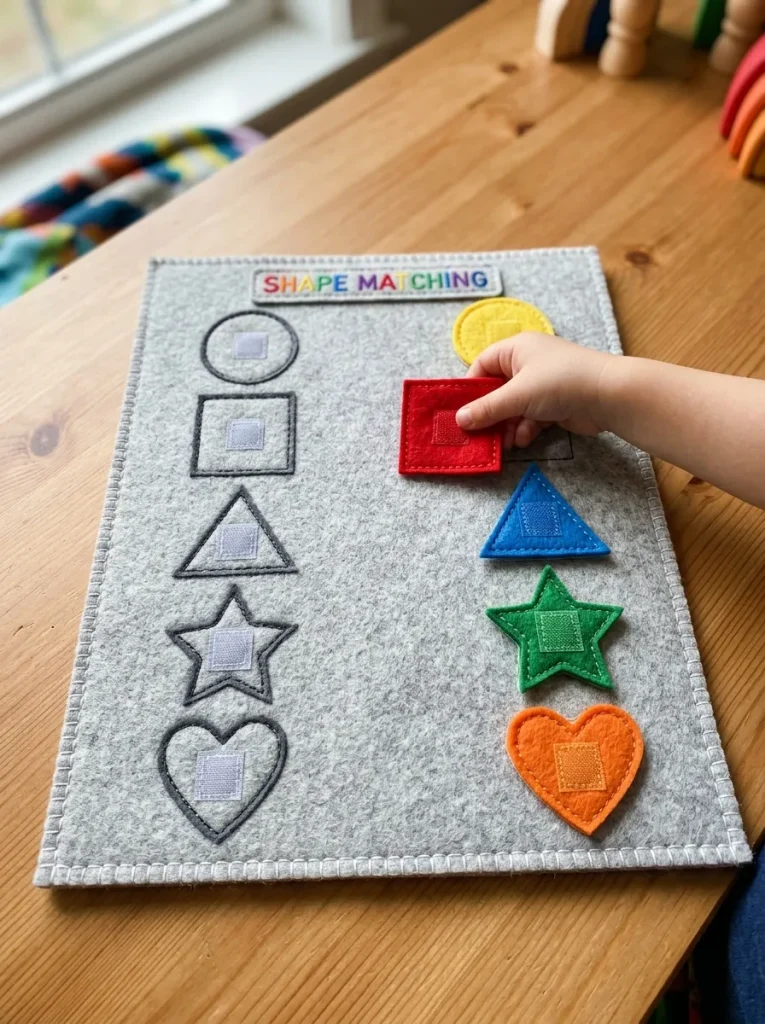
A geometric shape-matching page builds spatial reasoning, visual discrimination, and early geometry skills in toddlers. The layout features stitched outline target shapes—such as circles, squares, triangles, stars, and hearts—sewn directly onto the page surface. Corresponding thick felt shape cutouts fitted with hook-and-loop backing allow children to match and attach each 2D geometric piece onto its correct outline target.

Cut five basic geometric shapes—circle, square, triangle, star, and heart—from distinct, vivid colors of stiff felt. Trace around each cut shape onto the page base using a fabric marker, stitching along the traced outline guidelines with dark, high-contrast thread to create clear visual targets. Sew a small patch of loop velcro inside the center of each stitched page target. Attach the matching hook velcro patches onto the undersides of your colorful felt cutouts, doubling the felt layer on each cutout piece to give it thickness and durability for small hands to grasp easily.

Idea 6: Button-On Flower Garden and Butterfly Page

Step-by-Step Guide

A button-on flower garden page provides an excellent workout for finger strength and dexterity as toddlers work to push large buttons through felt buttonholes. The page presents a lush garden bed filled with green stems, while detachable colorful felt flower heads and butterflies can be buttoned on and off. This activity reinforces color recognition while building the functional self-dressing skill of manipulating real garment buttons.

Stitch three to five green felt stems and leaf cutouts onto a light blue or beige page base. Sew a large, flat 1-inch plastic button securely onto the top end of each green stem using heavy-duty button thread, ensuring the buttons are anchored tightly for safety. Cut various multi-layered flower heads and butterfly shapes from colorful felt. Cut a clean buttonhole slit in the center of each flower head using sharp embroidery scissors, reinforcing the buttonhole edges with a dense blanket stitch or machine buttonhole stitch so the felt does not stretch out over repeated play.

Idea 7: Tic-Tac-Toe Game Page with Storage Pocket

Execution Process

A felt tic-tac-toe page turns a classic strategy game into a quiet, travel-friendly activity suitable for siblings or parent-child play. Featuring a stitched 3×3 grid board and detachable game pieces—such as felt bumblebees and ladybugs, or classic X’s and O’s—this page promotes social turn-taking, logic, and spatial planning. An integrated flap pocket across the bottom keeps game pieces safely contained when the book is closed.

Stitch four intersecting ribbon strips or embroidered cord lines onto the upper center of the page base to form a clean 3×3 grid board. Sew a small square of loop velcro into the center of each grid square. Create five “ladybug” game pieces (red felt circles with black dots) and five “bumblebee” game pieces (yellow felt ovals with black stripes) fitted with hook velcro backings. Construct a deep envelope-style felt pocket with a snap or velcro flap closure across the lower third of the page, providing a secure home for all ten game pieces during storage and transport.

Idea 8: Dress-Up Bear or Doll Wardrobe Page

Setup Method

A dress-up doll or bear wardrobe page encourages open-ended imaginative play, storytelling, and fashion creativity. Featuring a neutral felt teddy bear or doll figure stitched flat onto the left side of the spread, the opposite page features a closet hanger bar holding various mix-and-match felt outfits, hats, and shoes. Because soft felt naturally clings to soft felt, lightweight clothing pieces stay in place on the doll figure without requiring harsh fasteners.

Cut a cute bear or human doll silhouette from tan or peach felt, embroidering simple facial features and underwear details onto the figure before stitching it flat onto the page base. On the adjacent wardrobe page, sew a ribbon strip horizontally near the top to act as a closet hanging rod, stitching three shallow felt pocket drawers below. Cut a variety of colorful felt garments—such as shirts, pants, dresses, coats, and hats—ensuring all necklines and waistlines match the proportions of the base doll figure. Store the clothes inside the pocket drawers or tuck them over the closet hanging rod.

Idea 9: Braiding Hair and Hair Accessory Page

How to Make

A hair-braiding page offers young children an engaging, tactile way to practice three-strand braiding, ponytails, and hair accessory placement. Featuring a side-profile or front-facing felt girl character with long yarn or ribbon hair, children can comb, section, braid, and secure the hair using real hair elastics, mini claw clips, and snap barrettes. This peaceful activity refines bilateral motor skills and spatial coordination.

Stitch a felt face silhouette onto the upper half of the page base, embroidering eyes, nose, and a smiling mouth. Cut twenty to thirty 12-inch strands of thick acrylic yarn or satin ribbon in brown, blonde, or red shades. Bundle the yarn strands together, folding them in half and stitching the center fold securely along the character’s hairline across the top of the head to form a lush mane of long hair. Divide the hair into three distinct sections, securing the ends temporarily with a ribbon clip. Provide a small pocket at the bottom of the page stocked with mini hair elastics, fabric scrunchies, and snap clips so children can style the hair repeatedly.

Idea 10: Peek-a-Boo Barn Yard Animals Behind Flaps Page

Step-by-Step Guide

A peek-a-boo farmyard page captivates babies and young toddlers through surprise discovery and sensory exploration. The layout features several barn doors, haystack flaps, and tractor windows that lift open to reveal hidden farm animals beneath—such as a cow, pig, chick, and tractor driver. Manipulating fabric flaps builds object permanence understanding and finger isolation skills while introducing animal names and sounds.

Stitch small embroidered or printed felt animal faces—such as a pink pig, white cow, yellow chick, and brown horse—directly onto strategic spots on the page base. Cut barn door, fence, and haystack flap shapes from thick felt, ensuring each flap is slightly larger than its corresponding hidden animal. Position the flaps over the animal cutouts, stitching only along the top or side edge of each flap so it lifts open easily like a hinged door. Add small felt tab handles or ribbon loops to the outer flap edges so tiny fingers can pull the peek-a-boo doors open effortlessly.

Common Beginner Mistakes and How to Avoid Them

Creating a felt busy book involves balancing visual creativity with practical construction durability, where small assembly oversights can impact play safety and longevity. A primary error among beginners is using cheap, flimsy craft felt for base pages; soft acrylic felt flops and distorts easily under the weight of attached hardware. Always use stiff polyester felt or wool-blend felt (1.5mm to 2mm thick) for page bases to ensure structural stability. Another frequent mistake is relying entirely on fabric glue rather than stitching. While hot glue or fabric adhesive works well for temporary positioning, heavy toddler pulling will tear glued pieces apart over time; always reinforce moving parts, buttons, snaps, and velcro with tight hand-stitching or machine sewing. Additionally, attaching small loose beads or unanchored buttons poses serious choking hazards for toddlers under three years old; ensure all buttons are sewn with industrial-strength thread and anchor small accessories permanently to the page base using thick ribbon leads.

Practical Tips for Better Results

Achieving professional, store-bought quality with DIY felt busy books relies on adopting systematic preparation and construction techniques. Always round the sharp outer corners of your felt page bases using a coin as a tracing template; rounded page corners resist curling and bending far better than sharp square corners. When binding completed pages together, construct double-sided pages by sewing two finished activity sheets back-to-back with a layer of thin fusible fleece in between to hide rear thread knots and add comfortable padding. Utilize metal grommets (eyelets) along the left margin of each page pair, binding the book together with loose metal binder rings or thick ribbon ties; this modular binding method allows you to add, remove, or swap activity pages as your child grows and develops new skills. Furthermore, using a lint roller periodically keeps felt surfaces clean and free of loose fibers throughout the crafting process.

Styling, Presentation, or Organization Ideas

Integrating your completed busy book into daily routines and travel organization enhances its utility and keeps small activity components safe. Design a personalized cover page featuring your child’s name spelled out in colorful felt block letters, complete with a secure button-tab or velcro strap closure that keeps the book tightly bound when packed inside a diaper bag or backpack. To keep loose activity pieces—such as game markers, weather icons, or doll clothes—from going missing during travel, ensure every activity page includes an integrated zip-pocket or flap pouch where all small components are stored before turning the page. When gifting a handmade busy book for a birthday or baby shower, package the book inside a drawstring fabric travel bag equipped with a small brush for cleaning felt fibers, presenting a thoughtful, heirloom-quality educational keepsake.

Budget or Time Planning

Planning a felt busy book project with realistic budget allocations and assembly schedules ensures an enjoyable, stress-free crafting experience. A basic 6-to-8-page felt busy book constructed using felt multipacks, basic thread, and standard fasteners (velcro, buttons, zippers) typically costs between $15 and $30 in raw materials. Elaborate books incorporating specialized metal hardware, wool-blend felt, and intricate embroidery details may require an investment of $35 to $60. Building a busy book is a multi-step project: allocate roughly 1 to 2 hours per activity page for cutting, layout, and stitching. Spreading construction across a two-week period—setting aside short evening sessions to cut shapes, prepare cutouts, and stitch individual pages—allows you to complete a 10-page quiet book without feeling overwhelmed.

Creative Expansion and Advanced Inspiration

For experienced crafters seeking to elevate busy book design further, integrating sensory sound elements, light-up features, and personalized themes offers an exciting creative progression. Consider incorporating crinkle paper, squeakers, or jingle bells inside felt animal flaps to add auditory feedback to tactile play. Advanced makers can install safe, battery-operated LED micro-fairy lights behind felt star or flashlight cutouts, wiring the switch into a secure fabric pocket for glowing nighttime pages. You can also customize entire busy books around specific narrative themes—such as a day at the beach, a space exploration mission, a doctor’s clinic, or a miniature grocery store setup. Building a high-quality, personalized felt busy book provides an enduring testament to handmade love, providing young children with years of quiet discovery, learning, and joyful play.

Similar Posts

  • 10 Whites Living Room Ideas

    Spread the love

    Spread the loveCreating a white living room is one of the most timeless and transformative design choices you can make for your home. White interiors offer a quiet sense of calm, a clean aesthetic, and an adaptable foundation that works with nearly every design style. Whether you lean toward minimal modern, cozy farmhouse, classic traditional,…

  • 10 Bathroom Tray Decor Ideas

    Spread the love

    Spread the loveCreating a beautiful and functional bathroom is all about the details. One of the easiest ways to elevate your bathroom design is by styling a decorative tray. A bathroom tray not only helps keep your essentials organized but also adds a touch of personality and charm to the space. Whether you prefer a…

  • 10 Bathroom Interior Design

    Spread the love

    Spread the loveDesigning a bathroom that feels beautiful, functional, and refreshing is one of the most rewarding home upgrades you can make. Even small bathrooms can be transformed into elegant sanctuaries with the right layout, materials, lighting, and decor. Whether you prefer a modern, spa inspired, vintage, rustic, or minimalist look, there are endless ways…

  • 10 Plant Wall Shelf Ideas with Grow Lights

    Spread the love

    Spread the loveIndoor gardening has become one of the most stylish and practical ways to bring life into modern homes. Whether you live in a small apartment or a spacious house, there is something magical about surrounding yourself with greenery. One of the most creative approaches to indoor gardening is using plant wall shelves with…

  • 10 Scottish Castles Interior Bedroom

    Spread the love

    Spread the loveScottish castles have long captured the imagination of travelers history lovers and interior design enthusiasts. From misty highlands to rugged coastlines these ancient structures tell stories of royalty clan battles and centuries old traditions. One of the most fascinating spaces inside these castles is the bedroom. Scottish castle interior bedrooms combine grandeur warmth…

  • 10 Soft Muted Tone Christmas Interior

    Spread the love

    Spread the loveCreating a soft muted tone Christmas interior is one of the most beautiful ways to bring holiday magic into your home. Instead of using bold reds, bright greens, and high contrast accents, this style focuses on gentle colors, quiet textures, and understated elegance. It is perfect for anyone who loves cozy atmospheres, calm…

Leave a Reply

Your email address will not be published. Required fields are marked *