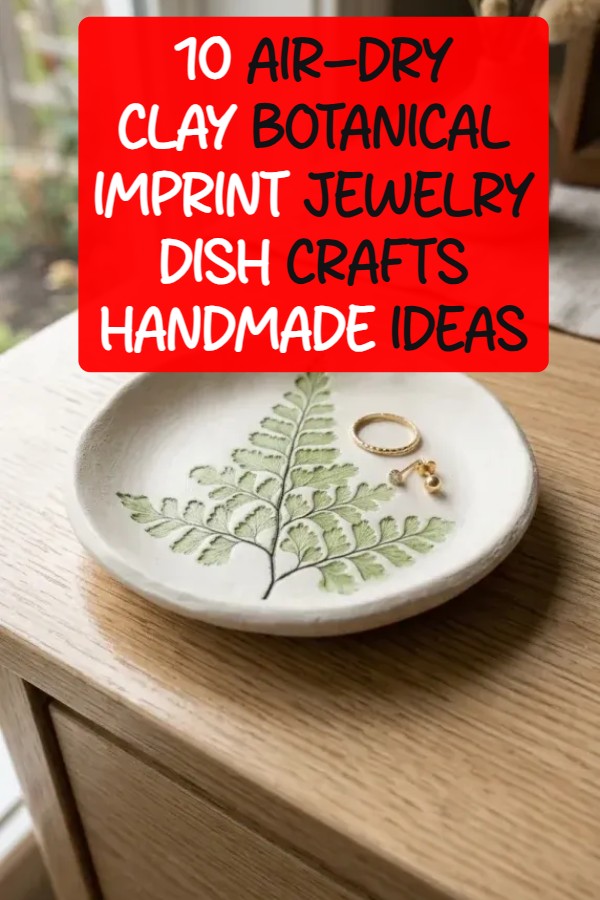
10 Air-Dry Clay Botanical Imprint Jewelry Dish Crafts Handmade Ideas

Spread the love

Introduction

Air-dry clay botanical imprint jewelry dishes transform fresh garden clippings, delicate ferns, and wild blossoms into organic, functional trinket trays. Because air-dry clay cures without high-temperature kiln firing, it offers an approachable ceramic medium for preserving leaf textures, petal venation, and seed patterns. Pressing freshly harvested flora into smooth clay slabs creates crisp negative-space relief impressions that catch watercolor washes, metallic leaf accents, and high-gloss glazes. This guide presents ten botanical imprint jewelry dish designs, complete with shaping methods, drying techniques, painting strategies, and protective sealing to help you craft durable, heirloom-quality vanity dishes.

Why This Idea Is Trending

  • Accessible Clay Crafting: Requires no potter’s wheel, kiln firing, or specialized ceramic tools—just simple rolling, pressing, and air-curing.
  • Biophilic & Organic Aesthetic: The tactile impressions of genuine flora bring natural textures and calming earth tones to dressers, bedside tables, and vanity counters.
  • Sentimental Preservation: Captures blooms from wedding bouquets, anniversary arrangements, or travel wildflowers into lasting functional keepsakes.
  • Low-Cost, High-Reward Gifting: An affordable project that yields boutique-grade handmade gifts for birthdays, Mother’s Day, and bridal parties.

Materials & Studio Preparation

To ensure smooth surfaces and clean botanical relief, gather the following supplies:

  • Clay & Shaping: White or terracotta air-dry clay, acrylic rolling pin, guide sticks (1/4-inch thickness), small ceramic bowls or ramekins (for drying molds), craft knife, fine-grit sanding sponge (320–400 grit).
  • Botanicals: Freshly harvested leaves with prominent veins (e.g., ferns, sage, monstera, lavender, rose geranium).
  • Color & Sealing: Liquid watercolors, soft acrylic paints, metallic gold leaf or liquid gilding paint, fine-tip detail brushes, non-yellowing polyurethane varnish or UV resin.

Prep Tip: Roll your clay evenly between two 1/4-inch wooden dowels to maintain consistent thickness across the entire dish slab, preventing uneven warping or edge cracking during the drying cycle.

1. Minimalist Maidenhair Fern Catchall Bowl

How to Create

The delicate, fan-shaped leaflets of maidenhair ferns leave intricate, feather-light impressions in clay. Roll out a 1/4-inch circular clay slab. Press a fresh maidenhair fern frond firmly into the clay using an acrylic roller. Peel the frond back carefully with tweezers to reveal the fine vascular details. Trim the slab into a neat 4-inch circle, smooth the perimeter with a damp sponge, and press the disk gently into a small curved bowl lined with parchment paper. Once dried for 48 hours, apply a soft moss-green watercolor wash inside the impressions, wiping the raised surface clean to highlight the veins, and seal with a satin varnish.

2. Gilded Edge Monstera Leaf Ring Dish

How to Create

A miniature tropical statement dish shaped like a split-leaf monstera. Trace and cut a heart-shaped monstera leaf outline from rolled clay, using a craft knife to carve the iconic leaf fenestrations (slits). Use a real monstera leaf or a sculpting tool to press deep central veins down the leaf surface. Curve the leaf edges upward inside a shallow ramekin to create a bowl shape. After curing, paint the rim and main stem with liquid gold gilding paint for a modern, luxurious contrast against natural white clay.

3. Delicate Lavender Sprig & Honeycomb Hexagon Dish

How to Create

Combine geometric structure with wild floral simplicity. Cut a crisp hexagon from a clay slab using a craft ruler or hexagon cookie cutter. Place two flowering lavender sprigs diagonally across the center, rolling over them once with firm pressure. Gently remove the stems, leaving deep impressions of the floral buds and slender leaves. Paint the lavender bud indents with diluted soft violet watercolor, finish with a coat of protective gloss glaze, and use the dish to hold stud earrings and rings.

4. Wildflower Meadow Terracotta Trinket Plate

How to Create

Using terracotta-colored air-dry clay provides a warm, rustic Mediterranean backdrop for assorted meadow flora. Gather an eclectic mix of small wildflowers—such as chamomile, clover blossoms, and yarrow. Scatter them across an irregular, hand-pinched terracotta clay plate. Roll gently to embed the varied blossom shapes. Instead of adding paint, leave the clay natural and fill only the stamped floral depressions with an opaque white acrylic wash, creating a crisp botanical sketch effect across the terracotta base.

5. Sage & Eucalyptus Calming Ring Cone Tray

How to Create

This dual-purpose vanity set includes a shallow curved dish paired with a central clay cone for stacking rings. Press textured sage leaves and seeded eucalyptus pods into the circular base dish. Shape a separate 2-inch pointed clay cone, rolling a single eucalyptus leaf around its base. Score and slip the cone onto the center of the textured dish using a drop of water. Once dry, highlight the leaf textures with a pale sage green and eucalyptus-gray wash, finishing with a high-gloss waterproof glaze.

6. Pressed Daisy & Golden Foil Scalloped Saucer

How to Create

A cheerful, vintage-inspired vanity dish featuring real daisy or cosmos flower impressions. Roll out a clay slab and use a fluted, scalloped pastry cutter to form a wavy edge. Press whole daisy flower heads face-down into the clay, embedding the ray petals and circular seed centers. After the dish cures in a curved mold, brush adhesive sizing into the central petal veins and apply delicate flakes of genuine gold foil leaf, burnishing smoothly to give the floral core a radiant metallic gleam.

7. Deep Indigo Ginkgo Biloba Leaf Fan Dish

How to Create

The iconic fan shape of the ginkgo biloba leaf makes a striking, sculptural trinket dish. Cut rolled clay directly around the perimeter of a large ginkgo leaf, leaving a short stem to serve as a handle. Press the leaf deeply into the cutout to transfer its characteristic radiating linear striations. Gently curl the outer fan edges upward. After drying, saturate the leaf grooves with rich, deep indigo blue acrylic wash, wiping the top surface back with a damp towel to create a striking denim-and-porcelain contrast.

8. Woodland Sheet Moss & Pine Needle Textured Oval

How to Create

For an earthy, tactile finish, use preserved forest moss and pine needle clusters to create an all-over stippled texture. Roll clay into a smooth oval. Press a thick patch of sheet moss and pine needles across the entire surface using firm hand pressure, creating a dense, organic relief. Curve the oval into a long, shallow tray perfect for holding necklaces and bracelets. Paint with earthy taupe, ochre, and lichen-green washes to evoke the forest floor.

9. Bleeding Watercolor Hydrangea Floret Dish

How to Create

Individual four-petal hydrangea florets create a soft, mosaic-like texture when stamped repeatedly. Stamp dozens of individual hydrangea florets across a 5-inch circular clay dish in an overlapping pattern. Once dried, lightly mist the cured dish with water and dab drops of turquoise, lavender, and rose pink liquid watercolor into the stamped cavities. The pigments will blend organically within the floral grooves. Finish with a two-part epoxy resin or clear UV resin pour for a glassy, pool-of-water depth.

10. Raw Edge Botanically Pigmented Rosemary Dish

How to Create

Embrace organic wabi-sabi aesthetics with rough, hand-torn clay edges and natural botanical juice transfers. Tear the edges of a clay slab by hand rather than cutting with a blade, leaving a deckled rim. Crush fresh rosemary needles slightly between your fingers to release their natural oils and green pigment, then roll them firmly into the clay. The natural green chlorophyll will subtly tint the impressions. Enhance the herbal grooves with a fine brush and forest-green wash, sealing with a food-safe matte sealant.

Similar Posts

Leave a Reply

Your email address will not be published. Required fields are marked *