Introduction
Air-dry clay botanical imprint jewelry dishes transform fresh garden clippings, delicate ferns, and wild blossoms into organic, functional trinket trays. Because air-dry clay cures without high-temperature kiln firing, it offers an approachable ceramic medium for preserving leaf textures, petal venation, and seed patterns. Pressing freshly harvested flora into smooth clay slabs creates crisp negative-space relief impressions that catch watercolor washes, metallic leaf accents, and high-gloss glazes. This guide presents ten botanical imprint jewelry dish designs, complete with shaping methods, drying techniques, painting strategies, and protective sealing to help you craft durable, heirloom-quality vanity dishes.
Why This Idea Is Trending
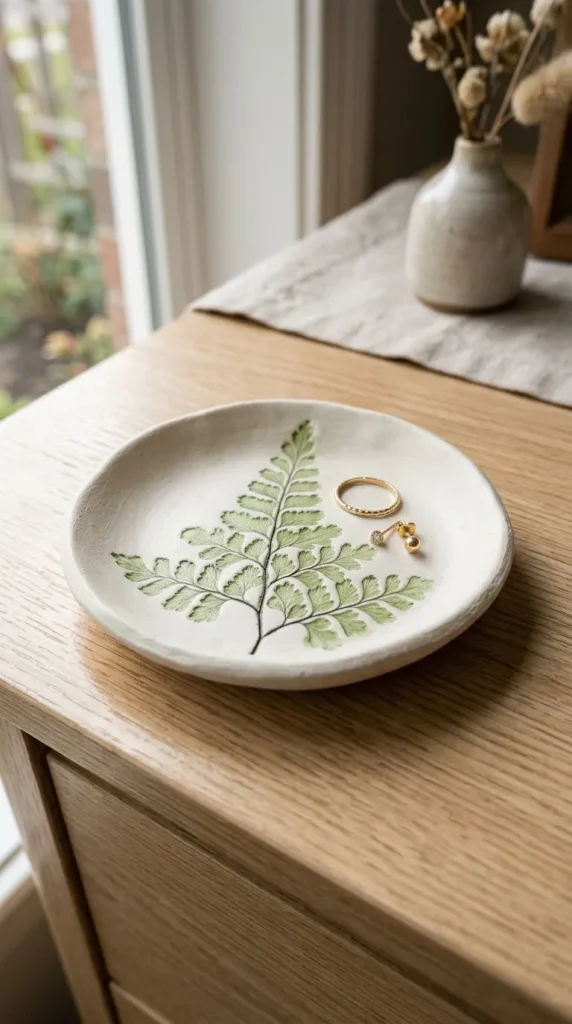
- Accessible Clay Crafting: Requires no potter’s wheel, kiln firing, or specialized ceramic tools—just simple rolling, pressing, and air-curing.
- Biophilic & Organic Aesthetic: The tactile impressions of genuine flora bring natural textures and calming earth tones to dressers, bedside tables, and vanity counters.
- Sentimental Preservation: Captures blooms from wedding bouquets, anniversary arrangements, or travel wildflowers into lasting functional keepsakes.
- Low-Cost, High-Reward Gifting: An affordable project that yields boutique-grade handmade gifts for birthdays, Mother’s Day, and bridal parties.
Materials & Studio Preparation
To ensure smooth surfaces and clean botanical relief, gather the following supplies:
- Clay & Shaping: White or terracotta air-dry clay, acrylic rolling pin, guide sticks (1/4-inch thickness), small ceramic bowls or ramekins (for drying molds), craft knife, fine-grit sanding sponge (320–400 grit).
- Botanicals: Freshly harvested leaves with prominent veins (e.g., ferns, sage, monstera, lavender, rose geranium).
- Color & Sealing: Liquid watercolors, soft acrylic paints, metallic gold leaf or liquid gilding paint, fine-tip detail brushes, non-yellowing polyurethane varnish or UV resin.
Prep Tip: Roll your clay evenly between two 1/4-inch wooden dowels to maintain consistent thickness across the entire dish slab, preventing uneven warping or edge cracking during the drying cycle.