Handmade clay trinket dishes have become one of the most accessible, versatile, and satisfying DIY home decor crafts. Acting as stylish catchalls for everyday jewelry, rings, keys, and loose coins, these small-scale vessels combine functional utility with endless artistic expression. Moving far beyond plain flat plates, modern clay crafting techniques replicate the look of high-end ceramic stoneware, polished marble, organic raw-edge pottery, and glazed porcelain—all without needing an expensive pottery wheel or kiln.
The magic of clay trinket dish crafting lies in the flexibility of air-dry and oven-bake polymer clays. By mastering simple forming techniques—such as rolling even slabs, slump-molding inside everyday kitchen bowls, creating marbled color ribbons, pressing fresh botanicals, and painting with gloss varnishes and liquid gold leaf—crafters can produce boutique-quality accent pieces in an afternoon.
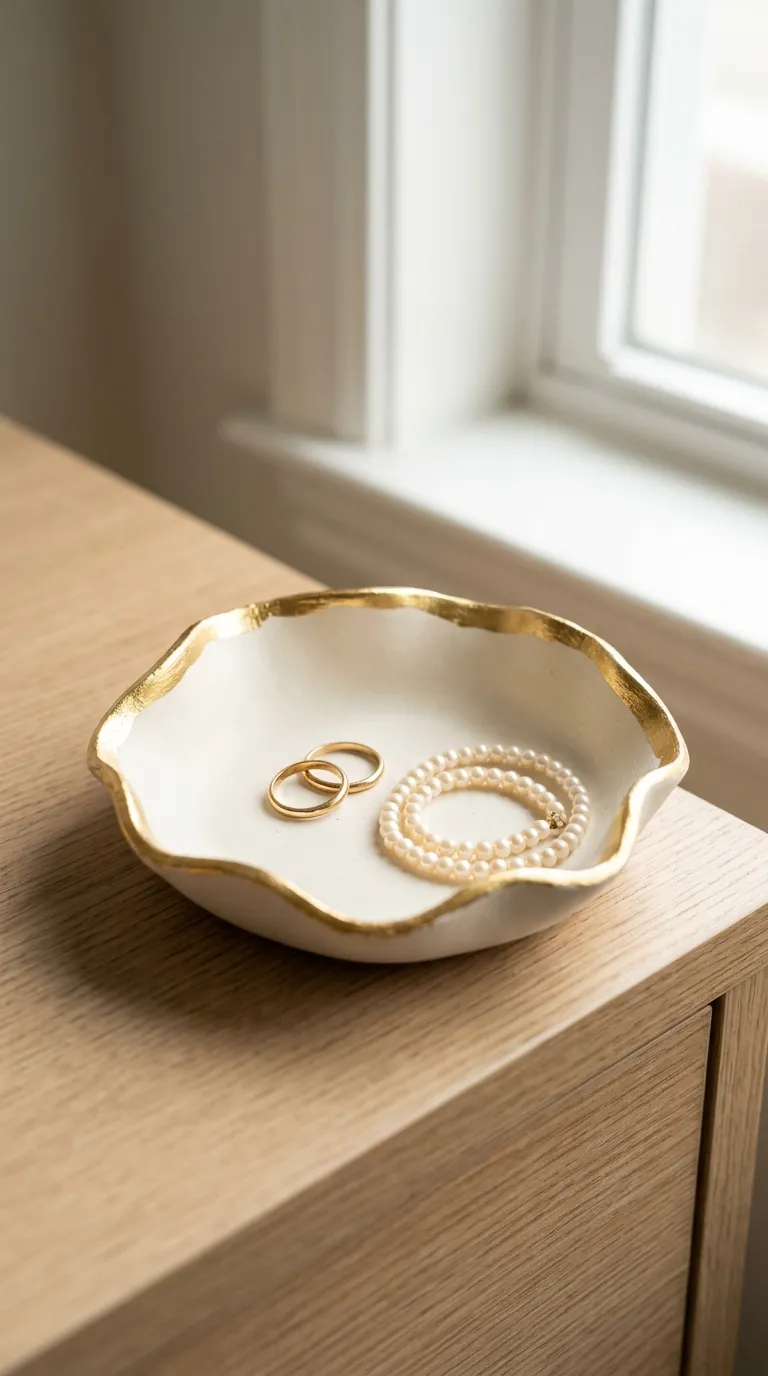
Whether you are crafting handmade gifts, curating your bedside nightstand, or styling a vanity tray, these ten curated DIY trinket dish projects provide step-by-step shaping blueprints, finishing techniques, and production-ready visual prompts.
Why This Idea Is Trending & Flattering
-
Accessible, Low-Barrier Crafting: Requires minimal investment in tools—basic air-dry clay or polymer clay, rolling pins, kitchen bowls, and craft paints are all you need to start.
-
Bespoke Vanity & Nightstand Organization: Keeps rings, earrings, and delicate accessories organized and scratch-free in dedicated, aesthetically pleasing catchalls.
-
Endless Aesthetic Adaptability: Easily customized to match any interior style—from Japandi minimalism and French vintage to playful checkered pastels and earthy terracotta.
-
High-End Ceramic Dupe Potential: Combining matte acrylic washes with high-gloss liquid varnishes mimics the texture, weight, and glaze of kiln-fired pottery.
-
Quick, Gratifying Creative Turnaround: Most projects take under an hour of active hands-on sculpting time, making them ideal for weekend crafting sessions or party activities.
Materials, Clay Types & Crafting Toolkit Guide
Selecting the appropriate clay body and finishing glaze is critical to ensuring your dishes dry crack-free, remain structurally durable, and resist daily wear.
Clay Mediums Compared
-
Air-Dry Clay (DAS, Crayola Air-Dry, Activa Plus): An earthy, mineral-based clay that hardens at room temperature over 24 to 48 hours. It yields a porous, stone-like texture that takes acrylic paint and sealers beautifully.
-
Polymer Clay (Sculpey Premo, Fimo, Kato Polyclay): A versatile, plastic-based compound baked in a home oven at low temperatures ($275^circtext{F} / 135^circtext{C}$). It bakes completely waterproof, remains slightly flexible (resisting drops), and comes in vibrant pre-mixed colors.
Essential Sculpting Tools & Supplies
-
Non-Stick Acrylic Rolling Pin & Depth Guide Rings: To roll uniform slabs (aim for $1/4$-inch thickness to prevent warping or cracking).
-
Slump Molds (Oven-Safe Ramekins, Glass Prep Bowls, Tart Pans): Everyday curved kitchen vessels used to drape and shape curing clay into shallow dishes.
-
Precision Craft Scalpel / X-Acto Knife: For cutting crisp, clean geometric borders and organic silhouettes.
-
Fine-Grit Sandpaper (220 to 400 Grit): For smoothing rough edges and surface imperfections after drying/baking.
-
Finishing Paints & Liquid Leaf: Acrylic craft paints, watercolor washes, and metallic oil-based liquid gold leaf for edge gilding.
-
Protective Glaze / Varnish: High-gloss or satin polyurethane sealer (such as Mod Podge Triple Thick, Liquitex Gloss Varnish, or UV resin) to create a protective, water-resistant ceramic-like shine.