Introduction
White kitchen cabinets remain a timeless choice in home design because of their versatility, brightness, and ability to make any space feel open and clean. However, because white cabinets act as a blank canvas, the flooring you select plays a crucial role in establishing the room’s temperature, style, and overall visual balance. The right flooring anchors white cabinetry—preventing the room from feeling sterile while adding warmth, contrast, or architectural character.
Selecting flooring for a white kitchen involves balancing practical durability, moisture resistance, and aesthetic harmony. From warm, rich hardwoods and versatile luxury vinyl plank (LVP) to striking patterned tiles and polished concrete, the options cater to diverse interior preferences. This comprehensive guide details 10 creative flooring ideas tailored specifically for white kitchen cabinets, complete with design concepts, material characteristics, color palettes, and step-by-step styling strategies.
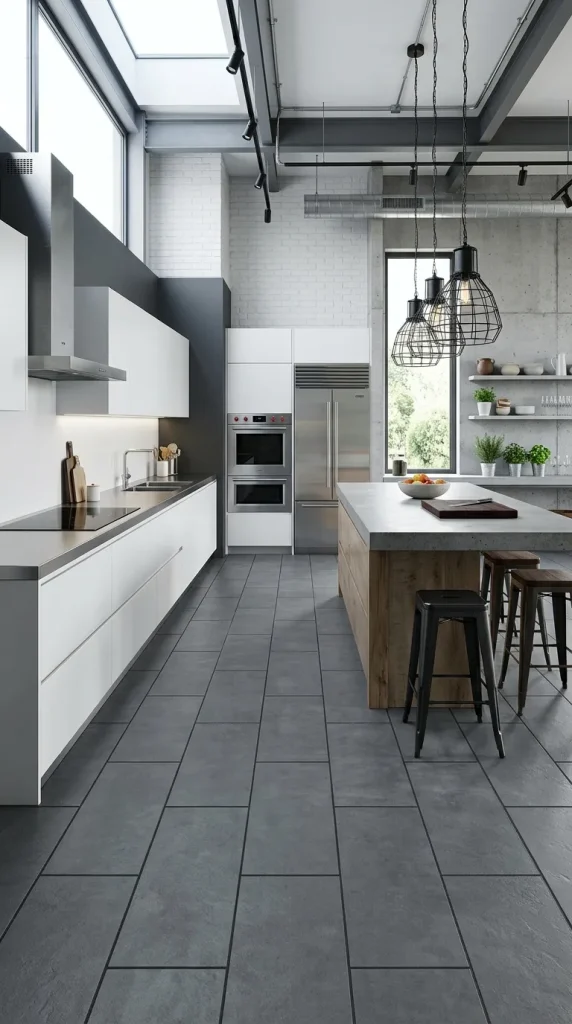
Why This Choice Is Trending & Useful
Pairing white kitchen cabinets with thoughtful flooring choices is a design strategy that delivers both high visual impact and long-term value. White cabinetry reflects ambient light, which allows for immense flexibility when choosing flooring tones—ranging from deep, dramatic dark woods to soft, light-reflecting natural stones.
The practical value of this pairing lies in adaptability. While replacing kitchen cabinets is a major, costly renovation, flooring can be chosen to establish distinct design aesthetics—such as Modern Farmhouse, Coastal, European Minimalist, or Industrial Loft—without altering the cabinetry foundation. Furthermore, modern flooring technologies like waterproof Luxury Vinyl Plank (LVP) and stain-resistant porcelain tiles make it easier than ever to achieve high-end aesthetic looks (like natural marble or aged timber) in high-traffic, spill-prone kitchen environments. Mastering flooring-to-cabinet contrast equips homeowners with core interior design skills, including balance, material pairing, and spatial proportion.
Materials and Preparation
Achieving a durable, seamless kitchen flooring installation requires selecting appropriate subfloor materials and preparing surfaces to withstand moisture, heavy foot traffic, and daily spills.
Essential Material Options & Specifications
- Natural Hardwoods: Oak (white or red), walnut, hickory, and maple with moisture-resistant polyurethane or hardwax-oil sealers.
- Luxury Vinyl Plank (LVP/SPC): Rigid core waterproof vinyl featuring stone-polymer composite cores and high-density wear layers (20 mil+ recommended).
- Porcelain & Ceramic Tile: High-density porcelain, encaustic cement tile, slate, and honed Carrara marble.
- Concrete & Resin: Polished, stained, or epoxy-coated concrete slabs.
Preparation & Installation Strategy
- Evaluate Subfloor Moisture: Test concrete or plywood subfloors for moisture vapor emission before laying hardwood, LVP, or tile to prevent warping or adhesive failure.
- Determine Cabinet Heights: Decide whether flooring will be installed before or after cabinet installation. Installing continuous flooring before cabinets ensures level appliance fitting and easier future kitchen reconfigurations.
- Plan Transition Lines: Use matching T-moldings, metal edge strips (Schluter profiles), or flush threshold transitions where kitchen flooring meets adjacent living room floors.
Idea 1: Natural Honey White Oak Hardwood
Concept and Design Overview
Natural honey white oak hardwood is one of the most popular pairings for white kitchen cabinets. The warm, pale golden tones and subtle, muted grain patterns of white oak balance the crispness of white cabinetry, introducing organic warmth without darkening the room.