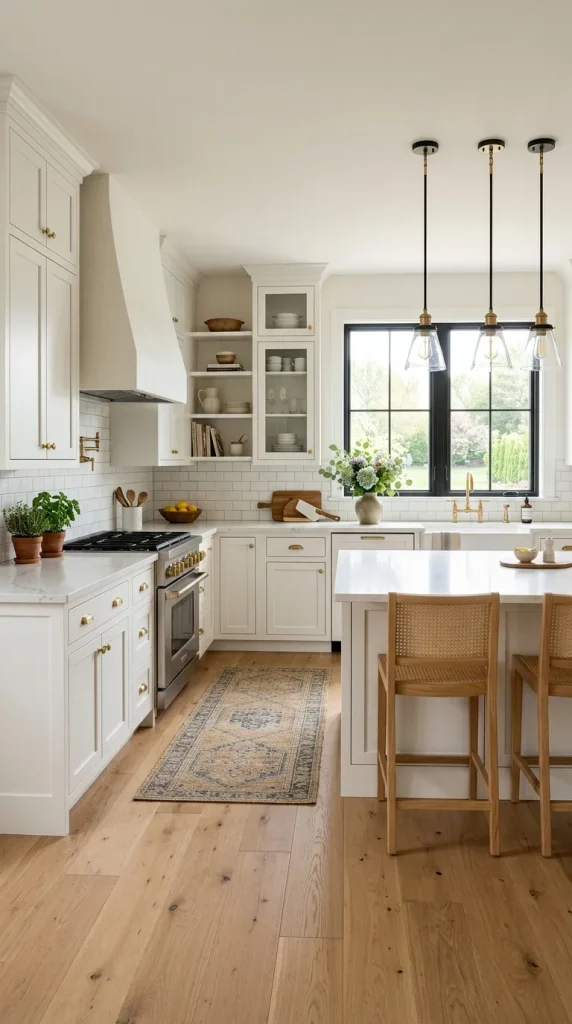
Herringbone light wood-look porcelain tile combines the classic elegance of European parquet flooring with the waterproof, scratch-resistant durability of porcelain. Arranging light oak or grey wood-look tiles in a 90-degree V-shape herringbone pattern creates movement and architectural sophistication beneath white cabinets.
This installation is suited for high-humidity environments, homes with pets, or kitchens with direct pool deck access where real wood might warp. The subtle light wood texture introduces warmth, while the herringbone pattern adds visual interest. The color palette highlights ash oak, driftwood grey, white cabinetry, and soft brushed nickel hardware.
Step-by-Step Creation Method
- Select Rectangular Wood-Look Planks: Source porcelain wood-look tiles in a 4×24 inch or 3×18 inch ratio suitable for herringbone layout patterns.
- Establish Center Line: Find the exact center axis of the kitchen floor, snapping chalk lines to ensure the herringbone pattern runs symmetrically toward main entryways.
- Lay at 45-Degree Angle: Install tile planks at a 45-degree angle to the room’s walls, working outward from the center guide line.
- Match Grout to Wood Tone: Use a high-performance grout color that matches the dominant wood-tone shade to keep the pattern subtle rather than harsh.
- Seal Grout Lines: Apply a penetrating grout sealer to protect light-colored grout joints from food spills and grease.