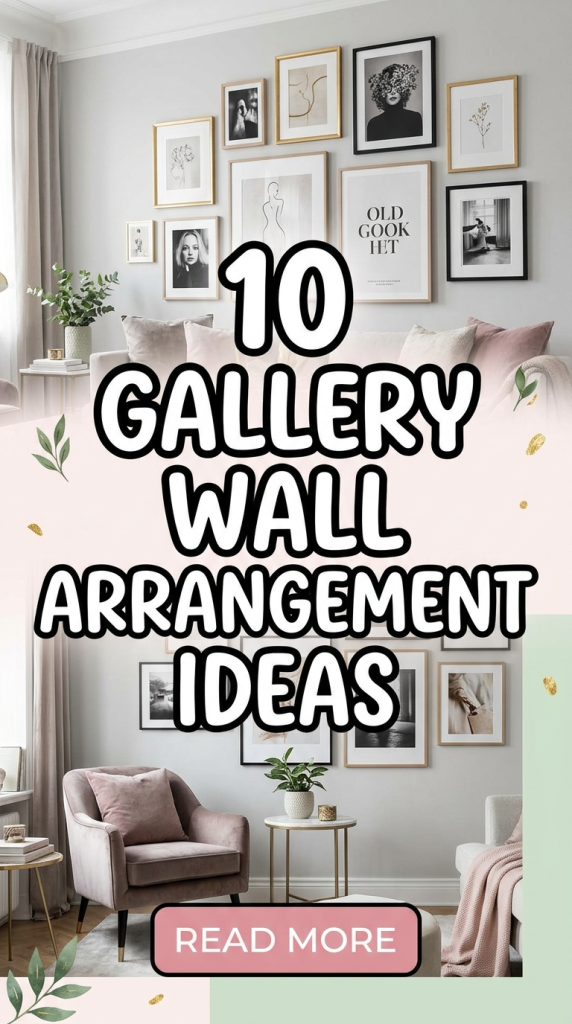
A gallery wall is one of the most powerful ways to personalize your home. It tells your story, reflects your style, and turns blank walls into meaningful focal points. Whether you live in a small apartment or a spacious house, gallery walls can work in any room when planned correctly. The key lies in choosing the right arrangement that balances art, spacing, and visual flow.
In this guide, you will discover ten gallery wall arrangement ideas that suit different interiors, moods, and skill levels. These ideas are perfect for Pinterest readers who want inspiration that feels achievable, stylish, and timeless.
- Classic Grid Gallery Wall
The classic grid gallery wall is perfect for anyone who loves symmetry and clean lines. This arrangement features frames of the same size placed evenly in rows and columns. It works especially well in modern, minimalist, and Scandinavian interiors.
This layout brings a sense of calm and order to a space. Because the frames are uniform, the focus shifts to the artwork itself. You can use family photos, black and white prints, or simple illustrations to keep the look cohesive.
The grid arrangement is ideal for living rooms, home offices, and dining areas where structure is appreciated. To make it visually striking, use identical frames in black, white, or natural wood. Measure carefully before hanging to ensure consistent spacing between frames.
This style is also beginner friendly because it is easy to plan and forgiving when executed with precision.

- Salon Style Gallery Wall
The salon style gallery wall is inspired by traditional art galleries where artwork is displayed from floor to ceiling. This arrangement mixes different frame sizes, orientations, and art styles for a collected and curated look.
This approach works best in creative homes and eclectic interiors. The key to making it successful is layering and balance rather than strict symmetry. Larger pieces usually anchor the arrangement, while smaller pieces fill in gaps around them.
Salon style gallery walls are perfect for staircases, large living room walls, and hallways with high ceilings. They create visual drama and instantly draw attention.
To keep the arrangement from feeling chaotic, choose a unifying element such as a consistent color palette, similar frame finishes, or a repeating theme in the artwork.

- Horizontal Line Gallery Wall
A horizontal gallery wall arranges artwork in a straight line across the wall. This style works beautifully above furniture such as sofas, beds, consoles, and dining benches.
The horizontal line creates a sense of width, making small rooms appear larger. It also provides a grounding effect when paired with furniture below.
You can use matching frames for a polished look or mix frames for a more relaxed style. Keep the top or bottom edges aligned to maintain visual flow.
This arrangement is ideal for modern homes and renters because it requires fewer holes and is easy to adjust or expand later.

- Vertical Gallery Wall
Vertical gallery walls draw the eye upward, making ceilings appear taller. This arrangement is ideal for narrow walls, corners, and small spaces that need visual height.
Stack frames vertically using either identical sizes or a mix of proportions. This style works especially well in stairwells, entryways, and beside tall furniture like bookcases.
To enhance the vertical effect, choose artwork with strong lines or portrait orientation. Consistent spacing between frames helps maintain balance.
Vertical gallery walls are a smart solution when horizontal space is limited but you still want an impactful design.

- Organic Free Form Gallery Wall
The organic free form gallery wall embraces creativity and flexibility. There is no strict structure, allowing frames to be arranged naturally around a central piece or shape.
This style is perfect for boho, rustic, and artistic interiors. It feels relaxed and personal, often evolving over time as new pieces are added.
Start with a central anchor piece, then build outward, adjusting spacing as you go. The goal is visual harmony rather than symmetry.
This arrangement works well in bedrooms, creative studios, and cozy living spaces where warmth and personality matter most.

- Gallery Wall with Mixed Media
A gallery wall does not have to be limited to framed art. Mixing media adds depth and interest. You can include mirrors, wall sculptures, textiles, clocks, or shelves.
This arrangement works beautifully in transitional and eclectic interiors. The combination of textures creates a layered look that feels dynamic and curated.
When mixing media, maintain balance by repeating materials or colors throughout the display. For example, combine metal frames with metal accents or wood frames with wooden decor.
This type of gallery wall is ideal for entryways and living rooms where you want a strong first impression.

- Color Coordinated Gallery Wall
A color coordinated gallery wall focuses on a specific color palette rather than matching frame sizes or styles. This approach creates cohesion while still allowing for variety.
Choose two to three main colors and ensure they appear consistently across artwork, photos, or frames. Neutral backgrounds help the colors stand out without overwhelming the space.
This arrangement works well in contemporary homes and creative spaces. It is also great for children rooms or themed rooms where color plays a central role.
Color coordinated gallery walls are visually pleasing and photograph beautifully for Pinterest sharing.

- Black and White Gallery Wall
A black and white gallery wall is timeless, elegant, and versatile. By removing color, the focus shifts to composition, contrast, and storytelling.
This arrangement works in almost any room, from living rooms to bedrooms and offices. It pairs well with both modern and traditional decor styles.
Use black frames, white frames, or a mix of both for subtle contrast. Keep spacing consistent to maintain a clean look.
Black and white gallery walls are especially effective when displaying personal photography, architectural prints, or minimalist art.

- Gallery Wall Around a Statement Piece
Instead of treating all pieces equally, this arrangement centers around one statement artwork. The surrounding pieces support and enhance the focal point rather than compete with it.
The statement piece could be a large painting, a bold photograph, or a unique object. Smaller frames are arranged around it in a balanced way.
This style works well in living rooms and bedrooms where you want a clear visual hierarchy. It also makes planning easier because the main piece guides the rest of the layout.
This arrangement is perfect for highlighting meaningful or high impact artwork.

- Shelf Based Gallery Wall
A shelf based gallery wall uses picture ledges or floating shelves to display artwork. This approach offers flexibility and ease, allowing you to swap pieces without rehanging.
Shelves can hold framed art, small plants, books, and decorative objects. This layered look feels casual yet intentional.
Shelf gallery walls are ideal for renters or anyone who enjoys changing decor frequently. They work well in home offices, living rooms, and bedrooms.
To keep the display cohesive, vary the sizes but repeat colors or materials throughout the arrangement.

Tips for Planning the Perfect Gallery Wall
Before hanging anything, lay out your arrangement on the floor or use paper templates on the wall. This helps visualize spacing and balance.
Always measure carefully and maintain consistent spacing between frames. Use a level to keep everything aligned.
Choose artwork that resonates with you personally. A gallery wall should tell your story, not just follow trends.
Lighting also matters. Natural light or accent lighting can enhance the impact of your gallery wall.
Final Thoughts
Gallery walls are one of the most creative and flexible design elements in home decor. With the right arrangement, they can transform blank walls into powerful visual statements. Whether you prefer structured grids or organic layouts, there is a gallery wall style that fits your space and personality.
By choosing one of these ten gallery wall arrangement ideas, you can confidently design a wall that feels curated, intentional, and inspiring.