Creating a home theater room is no longer a luxury reserved for large mansions or high end homes. With thoughtful planning and smart design choices, you can transform almost any space into a cinematic retreat that delivers comfort, immersion, and style. A well designed home theater enhances movie nights, gaming sessions, and even sports viewing while adding value to your home.
In this detailed guide, we explore 10 home theater room design ideas that combine functionality, aesthetics, and comfort. Whether you are working with a dedicated room, a basement, or a small spare space, these ideas will help you design a theater room that feels professional yet personal.
Understanding the Basics of Home Theater Design
Before diving into specific design ideas, it is important to understand the key elements that make a home theater successful. These fundamentals apply to every design style and budget.
Lighting control is essential. A home theater should minimize glare and reflections to maintain image quality. Sound quality is equally important. Acoustic treatments help control echoes and enhance audio clarity. Seating comfort ensures long viewing sessions are enjoyable. Screen size and placement must be proportionate to the room, and decor should support the immersive experience without distractions.
With these basics in mind, let us explore the top home theater room design ideas.
- Classic Dark Cinema Style Home Theater
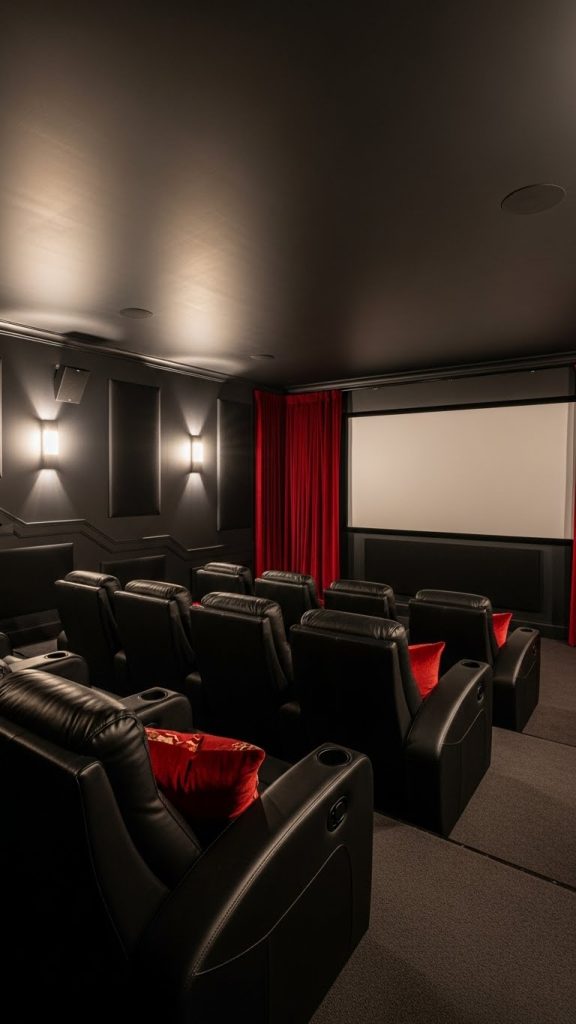
The classic cinema style home theater is inspired by traditional movie theaters. This design focuses on dark colors, plush seating, and dramatic lighting to create an immersive environment.
Dark wall colors such as charcoal gray, deep navy, or matte black help absorb light and reduce screen reflections. These tones also add a sense of drama and luxury. Acoustic wall panels can be upholstered in dark fabric to improve sound quality while blending into the design.
Seating is typically arranged in rows, often with reclining theater chairs that include cup holders and armrests. For added authenticity, consider installing tiered flooring so each row has an unobstructed view of the screen.
Lighting should be subtle and indirect. Recessed ceiling lights, wall sconces, or LED strip lighting along the floor provide just enough illumination without distracting from the screen. This design is ideal for dedicated home theater rooms where light control is easy to manage.