Introduction
Transforming plain mirrors with mosaic tiling turns basic wall decor into reflective architectural focal points. Applying glass tesserae, ceramic shards, sea glass, mother-of-pearl, or mirror tiles onto a wooden substrate allows you to frame functional reflective glass with rich color, texture, and light refraction. Instead of buying generic, mass-produced framed mirrors, crafting your own mosaic mirror frames lets you tailor palettes and geometric motifs to match any interior aesthetic. This guide details ten distinct mosaic mirror frame designs, complete with substrate choices, tesserae cutting techniques, adhesive selection, and grouting mechanics to help you build durable, heirloom-quality mosaic wall art for your home.
Why This Idea Is Trending or Useful
Mosaic mirror frames are a staple in contemporary interior styling, biophilic spaces, and maximalist home decor because they blend ambient light reflection with rich surface texture. Glass and glazed ceramic tesserae catch and scatter both natural sunlight and evening lighting, making narrow hallways, bathrooms, and small entryways feel brighter and more open. Mosaic craft is also an exceptional avenue for creative upcycling: chipped antique porcelain plates, sea glass collected from beach trips, broken stained glass scraps, and leftover bathroom tiles can be repurposed into functional art. Furthermore, sealed mosaic framing is water-resistant and durable, holding up well in humid environments like powder rooms and covered patios. The combination of sustainable material reuse, reflective light play, and custom styling makes mosaic mirror framing an enduring, high-reward DIY craft.
Materials and Preparation
Building safe, long-lasting mosaic mirror frames requires gathering a sturdy backing board, mirror glass, tile tesserae, specialized adhesives, and grout before starting. Essential crafting materials include half-inch exterior-grade plywood or MDF cut to your desired frame dimensions, a frameless beveled or flat mirror insert, assorted mosaic tesserae (stained glass sheets, vitreous glass tiles, glazed ceramic shards, or iridescent smalti), silicone adhesive or thin-set mortar, and sanded or unsanded cementitious grout. Required tools include dual-wheeled glass nippers, tile nippers, safety goggles, rubber grout floats, heavy-duty nitrile gloves, a tile sponge, painter’s tape, and a dust mask. Begin preparation by sanding the wood substrate lightly to promote adhesive bonding, then trace your mirror insert and border patterns onto the wood with a pencil. Protect the central mirror glass by taping heavy kraft paper over its face with painter’s tape, leaving only the frame border exposed for tiling and grouting.
Idea 1: Classic Moroccan Zellige Geometric Sunburst Frame
Setup Method
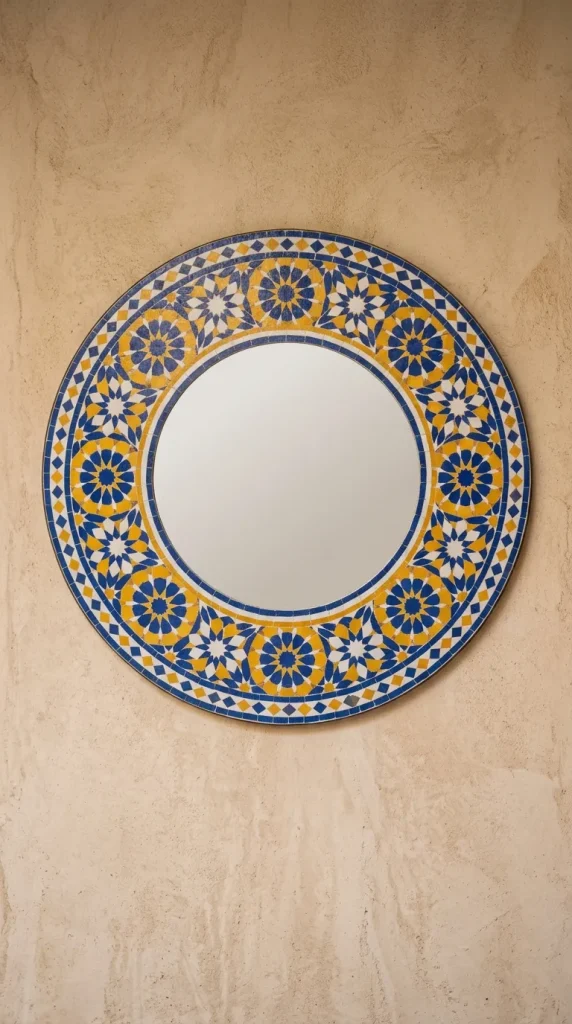
The Moroccan Zellige sunburst frame uses geometric, interlocking glazed ceramic tiles arranged in radiating starburst patterns around a central circular mirror. Traditional Moroccan tilework relies on sharp geometric angles, featuring saturated cobalt blues, warm safran yellows, and crisp whites that frame the reflective center with vibrant Mediterranean energy.