Side yards are often the most underutilized and challenging outdoor spaces on a residential property. Typically narrow, shaded by neighboring structures, and plagued by poor drainage or high foot traffic, side yards frequently become neglected passageways for trash cans and HVAC units. However, with thoughtful landscape design, these secondary side corridors can be transformed into beautiful functional extensions of your outdoor living space.
Designing a successful side yard relies on spatial zoning, scale control, and durable materials. Whether you want to build a private garden walkway, establish a hidden reading nook, install discreet utility screening, or maximize side storage, this comprehensive guide details 10 creative side house landscaping ideas across various budgets and property sizes. You will learn actionable strategies for selecting shade-tolerant plants, managing rainwater runoff, choosing hardscape materials, and maintaining utility access.
Why This Idea Is Trending or Useful
Side house landscaping has surged in popularity as homeowners seek to maximize every square foot of their property footprint. Rather than treating side yards as leftover utility space, modern outdoor design integrates these side passages as seamless transitions between front entryways and main backyard entertaining zones.
The value of side yard landscaping lies in problem-solving and space creation:
- Property Flow & Access: Well-designed stone pathways and flagstone steppers provide safe, mud-free footing between front yards, side gates, and back patios.
- Utility Concealment: Custom slatted wood screens and tall columnar hedges hide air conditioning units, trash bins, hose reels, and pool pumps out of sight.
- Micro-Space Utilization: Narrow side strips can be converted into specialized outdoor zones—such as dog runs, vegetable garden corridors, tool storage nooks, or serene Zen shade gardens.
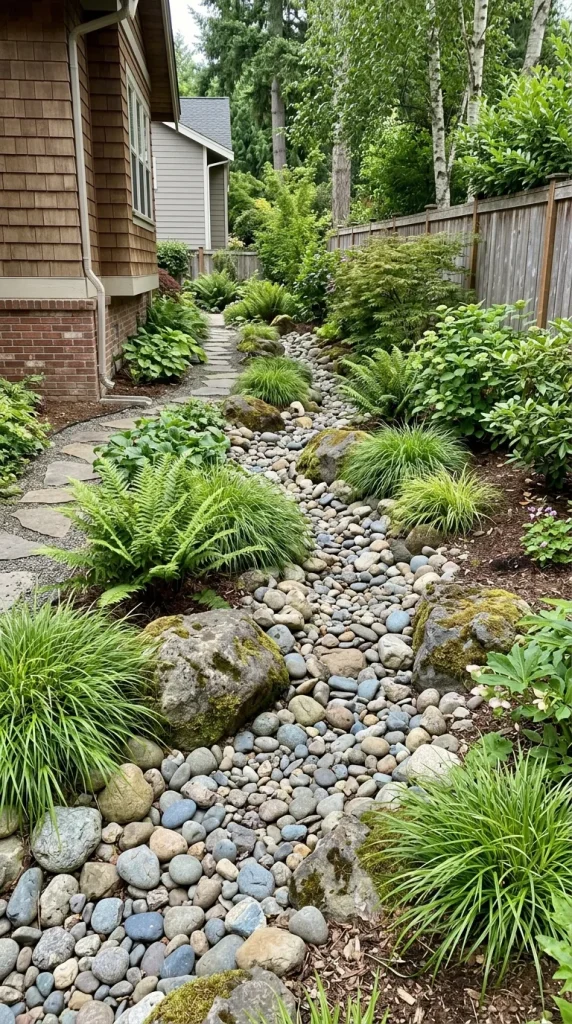
- Drainage Management: Because side yards collect roof runoff from both your home and neighboring houses, hardscaping side yards with gravel and French drains prevents water pooling and foundation damage.
Materials and Preparation
Achieving a durable, low-maintenance side yard landscape requires evaluating drainage patterns, sunlight hours, and local utility setbacks before installation.
Recommended Materials & Hardware
- Hardscaping & Pathways: Pea gravel, decomposed granite (DG), flagstone steppers, concrete pavers, river rock, and permeable gravel grids.
- Edging & Borders: Steel landscape edging, bender board, stacked stone borders, and pressure-treated timber sleepers.
- Planting & Containers: Shade-tolerant perennials (Hostas, Ferns, Astilbe, Heuchera), columnar privacy shrubs (Sky Pencil Holly, Fastigiata Yew), and vertical wall planters.
- Screening & Storage: Cedar slatted wood privacy panels, vinyl utility enclosures, and wall-mounted hose reels.
Key Rules & Preparation Steps
- Check Utility Setbacks & Call Before Digging: Before excavating pathways or planting trees, identify underground gas, electric, water, and cable lines. Maintain access clearances to utility meters and AC units.
- Evaluate Sunlight Levels: Measure exact hours of direct sunlight. Most side yards receive full shade or dappled light (under 4 hours of sun daily), requiring shade-tolerant plant selections.
- Grade for Water Drainage: Ensure ground slope falls away from your home’s foundation at a minimum 2% grade (a 2-inch drop for every 10 feet). Install French drains or dry creek beds if water pools against walls.
Idea 1: Modern Stepping Stone Pathway with Dark Gravel
Concept and Design Overview
The modern stepping stone path is a classic, high-impact side yard design that creates a clean, mud-free walking corridor between front and back yards. Large rectangular concrete pavers or natural flagstone slabs are spaced evenly apart, surrounded by a bed of contrasting dark basalt gravel or Mexican beach pebbles.