Introduction
Organizing a small pantry or shallow kitchen cabinet requires maximizing every vertical inch and hidden spatial void. When shelf space is limited, food items—such as canned goods, dry baking staples, snack bags, and spice jars—can easily clutter shelves, leading to expired food, duplicate purchases, and daily meal prep friction.
The key to sustainable small pantry organization lies in clear visibility, vertical stacking, and zone-based decanting: converting deep shelf voids, cabinet door backs, and floor spaces into accessible, labeled storage hubs. This comprehensive guide details 10 high-efficiency small pantry organization ideas across various budgets and layouts. You will learn actionable techniques for selecting airtight canisters, mounting damage-free door racks, choosing multi-tier turntables, and maintaining an organized kitchen inventory.
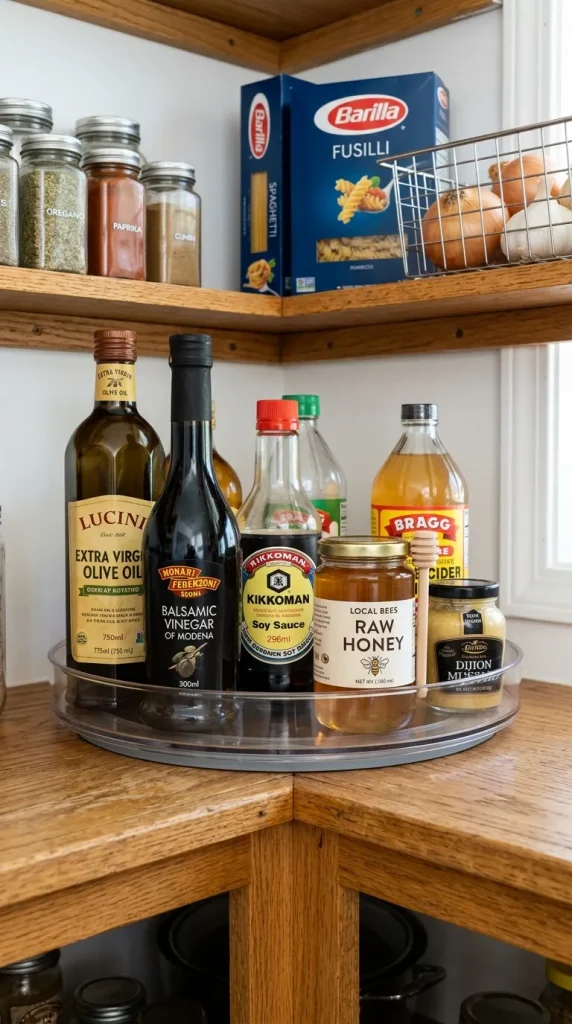
Key Rules & Spatial Preparation
Before buying containers and organizational bins, follow these foundational preparation steps:
- Purge & Categorize: Empty the pantry completely. Toss expired cans, stale dry goods, and half-empty boxes. Group remaining items into clear functional categories: Baking Staples, Dinner Prep/Grains, Breakfast/Cereal, Snacks, Canned Goods, and Baking Supplies.
- Measure Shelf Depth & Height: Measure exact shelf depth, height clearance between tiers, and door frame clearances before purchasing bins or door racks.
- Decant into Uniform Containers: Transferring bagged dry goods (flour, sugar, rice, pasta) into uniform clear airtight canisters eliminates bulky commercial packaging and keeps pests out.
- Follow the “First-In, First-Out” Rule: Place newer groceries behind older items so ingredients get used before expiring.