The deep taproot sleeve uses full-length, uncut cardboard tubes with completely open, un-folded bottoms to provide deep vertical root channels for long-rooted seedlings. Plants like sweet peas, broad beans, taproot carrots, parsnips, and squash send a single, thick taproot straight down within days of germination; standard shallow seed trays force these roots to hit a plastic wall and spiral, permanently weakening the plant. Leaving the full four-to-six-inch cardboard tube open at both ends provides an uninterrupted vertical root run, allowing the taproot to grow straight down until it reaches the air at the bottom, which naturally air-prunes the tip and stimulates vigorous secondary lateral root branching.
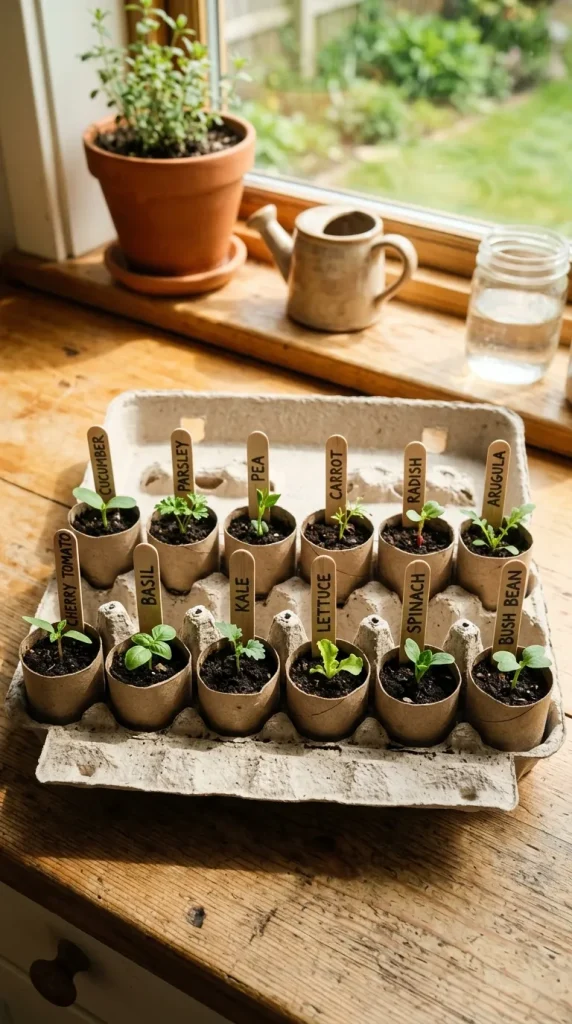
Begin setup by selecting full-length four-inch toilet paper rolls or cutting wrapping paper and paper towel cores into deep five-inch sleeves without folding or closing the bottom ends. Take a deep, solid plastic nursery tray or bread loaf pan and line the bottom with a half-inch layer of coarse vermiculite or washed pea gravel to facilitate drainage. Pack the open cardboard sleeves tightly side-by-side inside the tray so the snug arrangement keeps the tubes standing upright. Fill each vertical sleeve with damp seed-starting mix, tapping the tray against your potting table to settle the soil without over-compacting it. Sow pre-soaked sweet pea or bean seeds one inch deep into the top of each sleeve. When transplant time arrives, lift each vertical sleeve directly from the tray and plant the entire cardboard tube intact into your garden trench, ensuring the top rim sits flush with the outdoor soil surface.