To build this low-profile shelter, select a heavy-duty, opaque fifty-to-sixty-quart under-bed plastic storage box measuring approximately six to eight inches in total height. Line the long, shallow floor with a half-inch sheet of high-density closed-cell foam or foil-backed insulation board. Because vertical height is limited, cut custom-fitted half-inch foam strips to line all four interior sidewalls, securing them with foam-compatible spray adhesive. Cut a five-inch circular opening on one of the narrow end walls, keeping the bottom edge two inches above the container floor to retain the straw bedding inside. Seal the circular opening with waterproof foil tape to cover sharp plastic edges. Fill the shallow living area with a dense layer of dry straw, snap the low-profile lid down, and slide the entire unit under a deck, porch, or outdoor stairway, propping the base up on cedar wood shims to prevent ground moisture absorption.
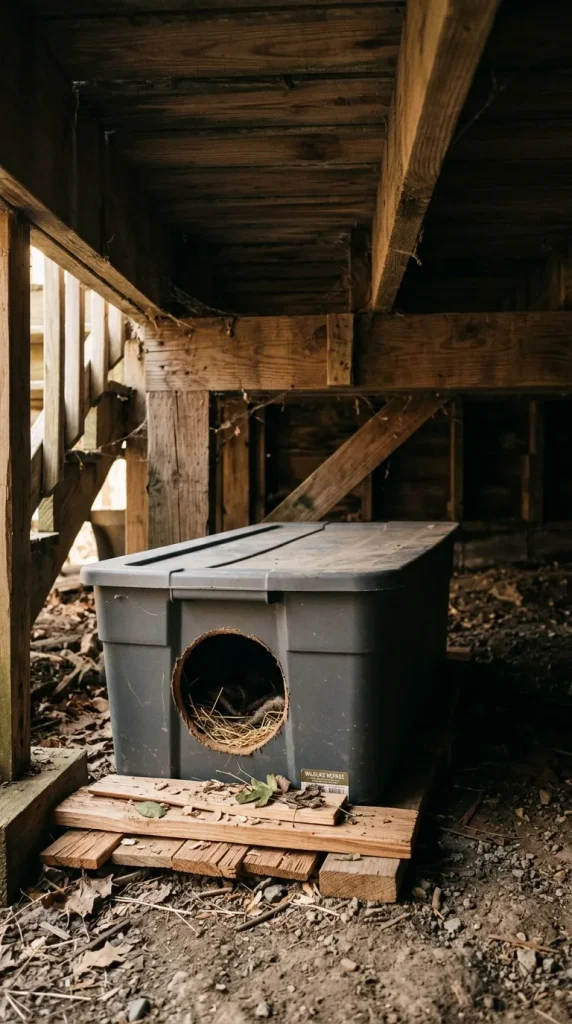
Idea 10: Clear Visual Monitoring Window Tote with Insulated Nest
Step-by-Step Guide
The clear visual monitoring window tote incorporates a transparent viewport into the upper lid or side wall, allowing caretakers to confirm if a cat is resting inside without opening the lid and releasing trapped heat. Feral and stray cats often flee if a human approaches and unlatches a shelter roof, letting cold air flood into the warmed chamber. By integrating a small, sealed piece of clear acrylic or polycarbonate sheeting into the lid above the wind-baffle entryway, caretakers can look inside using a small flashlight to check occupancy and straw cleanliness. The window is positioned away from the sleeping pocket to prevent winter drafts, maintaining a warm and private environment for the cat while giving caretakers peace of mind.