The solar-assisted passive thermal heat-sink shelter uses high-density masonry materials inside the tote to absorb, store, and slowly release ambient thermal energy throughout freezing nights. In cold climates, unheated outdoor shelters drop in temperature as soon as the sun goes down if an animal is not inside to generate body warmth. By placing solid, dark-colored concrete paving stones or dense clay bricks along the base beneath the straw bedding, the shelter creates a thermal heat sink. During the day, the dark plastic container and interior bricks absorb ambient environmental heat, which is then insulated by the foam walls and released slowly into the sleeping chamber over the coldest nighttime hours, moderating temperature swings and keeping the space warm.
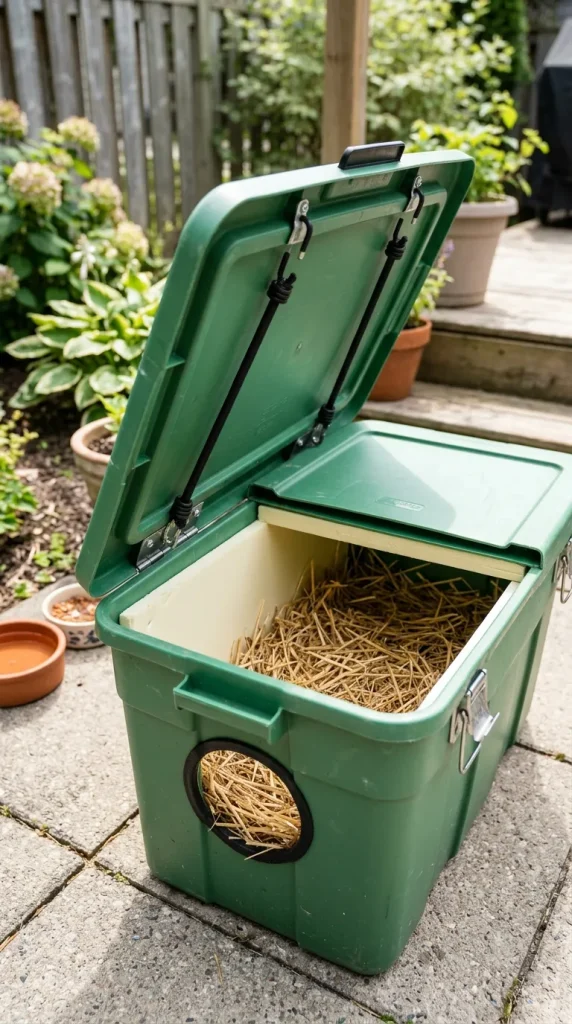
To set up this passive thermal shelter, choose a dark-colored (preferably dark gray or black) thirty-gallon heavy-duty storage tote to maximize solar absorption. Line the bottom of the tote with a layer of one-inch high-density foam board, followed by a heavy sheet of radiant foil. Place two or three clean, solid dark masonry bricks flat onto the foil base, arranging them in the center to serve as the thermal storage core. Cut two-inch-thick rigid foam panels to insulate the four vertical sidewalls, wedging them tightly around the perimeter of the bricks. Cut a five-inch circular entrance through the front wall above the level of the internal bricks, finishing the cut edge with smooth split-loom tubing. Cover the bricks with a thick layer of dry oat straw so the cat rests on soft, dry bedding above the warm masonry base. Fasten the insulated lid securely and position the finished house in a south-facing outdoor location that receives direct, unobstructed daytime sunlight.
Idea 8: Top-Loading Quick-Clean Bungee Hinged Shelter
Execution Process
The top-loading quick-clean bungee hinged shelter is designed for easy maintenance, allowing caretakers to inspect, clean, and re-straw the shelter without removing weather seals or disturbing resting animals. Typical tote shelters have lids taped completely shut to block wind, making it tedious and disruptive to replace soiled straw during wet winter months. This setup uses a split-lid design or flexible rubber bungee cord hinges that let the caretaker lift half the top lid for quick inspections and seasonal straw refreshes. A built-in interior foam drop-lid keeps the internal thermal barrier intact during maintenance checks, while exterior tension cords hold the outer plastic lid firmly shut against wind gusts and wandering wildlife.