A cascading chandelier spiderweb gauze canopy transforms an overhead dining room light fixture or entry lantern into a dramatic, room-anchoring spider nest. This layout radiates long, shredded tendrils of sheer gray and white cheesecloth outward from the central ceiling fixture, anchoring the fabric ends to the four corners of the room or letting them drape softly onto the dining table below. The elevated canopy draws the eye upward, making high ceilings feel intimate, shadowy, and claustrophobic. When dining beneath the installation, the soft airflow from movement causes the suspended gauze threads to flutter gently, creating the unsettling sensation of brushing against real cobwebs.
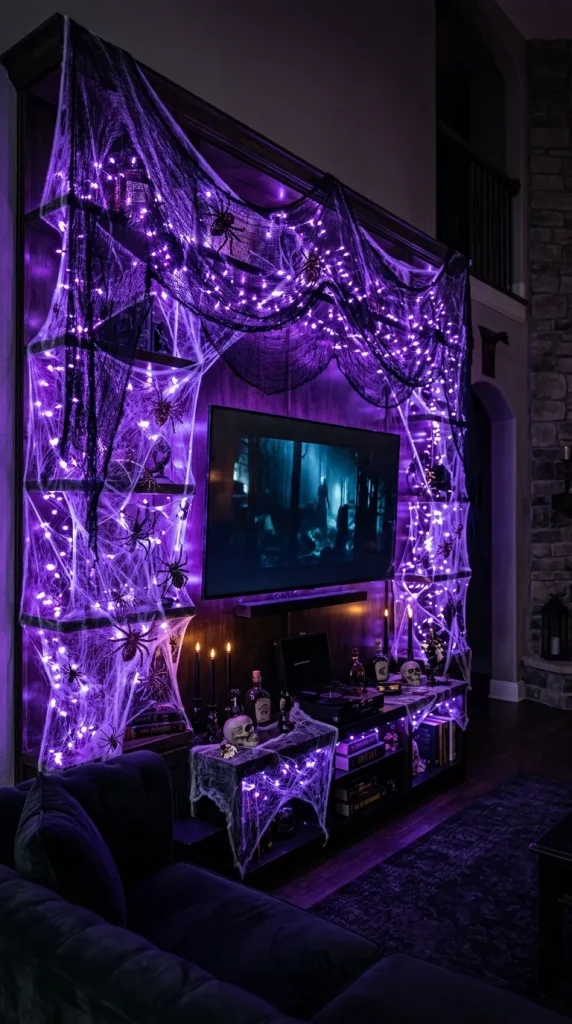
To create this overhead canopy, turn off power to your dining chandelier and ensure all bulbs are cool and fitted with low-heat LED bulbs. Cut eight narrow, three-yard strips of lightweight white and slate-gray cheesecloth, shredding the fabric bodies with vertical scissors slices and pulling the threads loose. Tie the top ends of the fabric strips around the upper central chain or base ring of the chandelier using clear monofilament fishing line. Drape the long fabric tails outward, securing the outer ends to ceiling corners using clear removable adhesive clips, or letting them drape straight down to graze the tabletop. Stretch ultra-fine spiderweb batting from the chandelier arms outward along the fabric tendrils, teasing the fibers until gossamer-thin. Place a massive, long-legged tarantula prop on top of the chandelier body, letting dozens of tiny plastic baby spiders crawl down the cascading gauze tendrils toward the dining table.